Welding-resistant tape must protect a defined area while nearby heat, sparks, pressure, or electrical conditions challenge the backing and adhesive. A backing that survives a brief temperature exposure can still shrink, curl, lose adhesion, tear during removal, or leave the protected area out of tolerance.
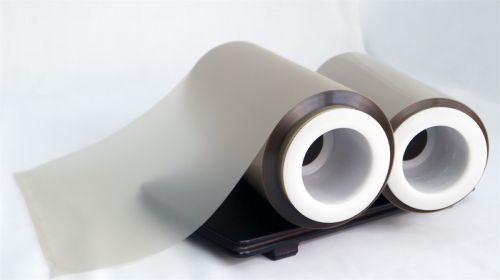
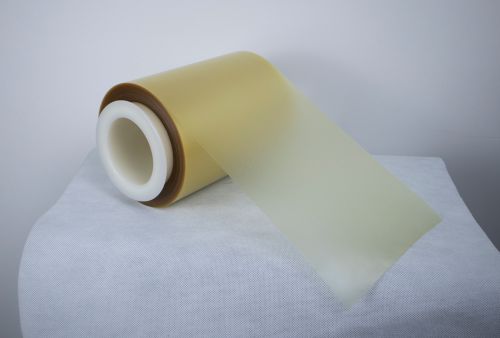
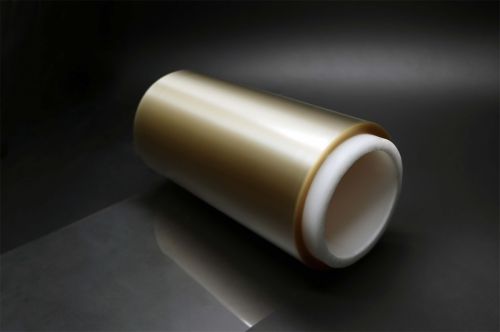
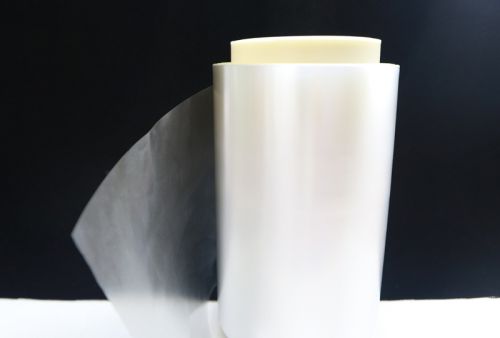
Dafu lists welding-resistant tape among the applications for its PEI film range. Material selection should connect the film’s verified properties with the adhesive system and the real welding process.
Start with the thermal event
Record the welding method, distance from the heat source, normal and peak backing temperature, exposure time, repeated cycles, contact pressure, and cooling sequence. A short radiant-heat event differs from continuous operation, and temperature at the tape surface may differ from equipment settings.
Dafu’s brochure reports a glass transition temperature of 217°C and a relative temperature index of 170°C for the represented PEI sample. These values support initial screening, but they do not establish a universal tape temperature rating.
Control shrinkage and edge position
The brochure reports shrinkage after 200°C for 30 minutes of 0.2% in the machine direction and 0.1% in the transverse direction for the represented sample. Test conditions matter, and the result should not be transferred automatically to another thickness or finished tape.
For masking applications, even small dimensional movement can expose an edge or pull against the adhesive. Measure tape width, edge position, curl, wrinkles, and protected-area coverage before and after the actual welding cycle.
Select thickness for handling and conformity
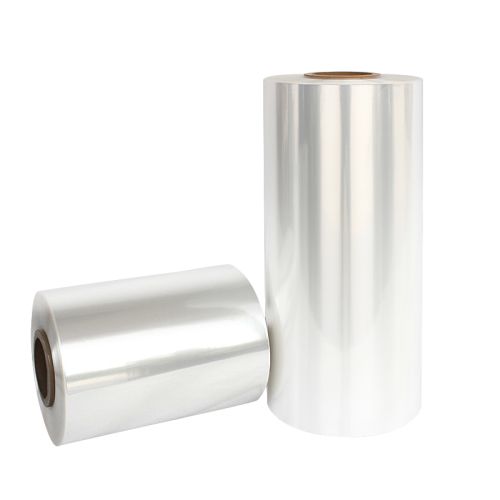
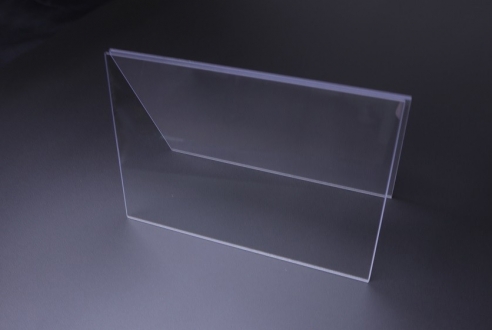
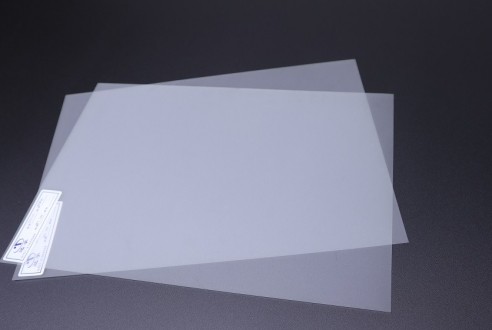
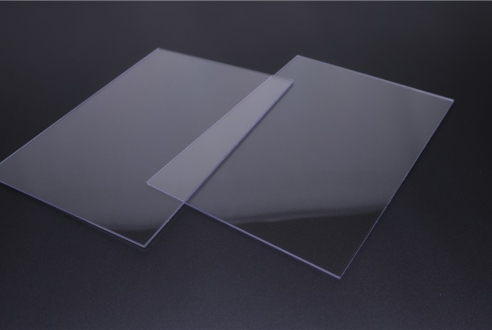
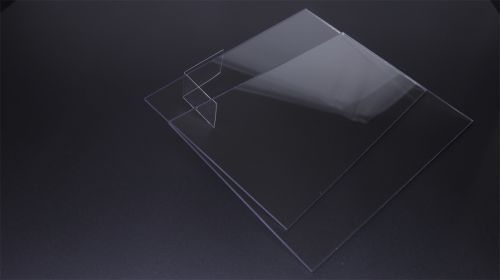
Dafu lists PEI film from 0.025 to 0.5 mm at widths up to 1,060 mm. A thinner backing may conform more easily but become harder to handle or remove. A thicker backing may improve stiffness and handling while increasing edge height or reducing conformity.
Run slitting, coating, unwinding, application, and removal trials at the intended production speed. Include narrow widths and die-cut shapes if they will be used commercially.
Treat the adhesive as part of the insulation system
The film and adhesive can have different thermal limits, expansion, chemical resistance, and electrical behavior. Test coating adhesion, initial tack, holding power during heat exposure, edge lift, residue, and removal force after cooling.
Surface selection can influence bonding. Dafu lists polished/matte and matte/velvet PEI surfaces. Confirm the coating side and validate any surface treatment with the exact adhesive chemistry.
Review electrical needs where relevant
For the represented 100 μm PEI sample, Dafu reports surface and volume resistivity of 10^15 ohms, dielectric constant of 3 at 1 MHz, and loss tangent of 0.006 under the stated methods. These typical values may support an insulation discussion, but finished-tape performance depends on backing thickness, adhesive, voltage, contamination, temperature, geometry, and overlap.
Dafu’s article on PEI film for 170°C insulation systems offers related thermal context. Any safety-critical electrical requirement still needs the applicable assembly test.
Validate production use, not only a laboratory strip
Apply tape to the actual metal, coating, or component surface. Include cleaning, pressure, dwell time, bends, corners, overlaps, and exposure to fluxes or process chemicals. After welding, inspect the backing, adhesive, protected surface, and removal behavior.
The broader Dafu engineering-film overview can support early sample selection. Commercial approval should use the exact film grade, thickness, surface, adhesive, coating weight, and converting route.
FAQ
Does PEI’s 170°C RTI define the tape rating?
No. The adhesive, tape construction, exposure duration, geometry, and test method also determine usable performance.
Why is shrinkage important for welding tape?
Dimensional movement can expose a masked edge, create curl, or change adhesive stress during the heat cycle.
Which PEI thickness should be used?
Choose thickness by conformity, stiffness, handling, edge height, removal, insulation needs, and converting capability.
Must the adhesive be tested with the film?
Yes. Film stability does not guarantee tack, holding power, residue control, or removal performance of the complete tape.
What should a production trial measure?
Measure application, edge lift, shrinkage, coverage, backing damage, residue, removal force, protected-surface condition, and any required electrical result.
Discuss a PEI tape-backing trial
Provide the welding process, temperature profile, PEI thickness, tape width, adhesive, substrate, and acceptance tests to define a sample plan.