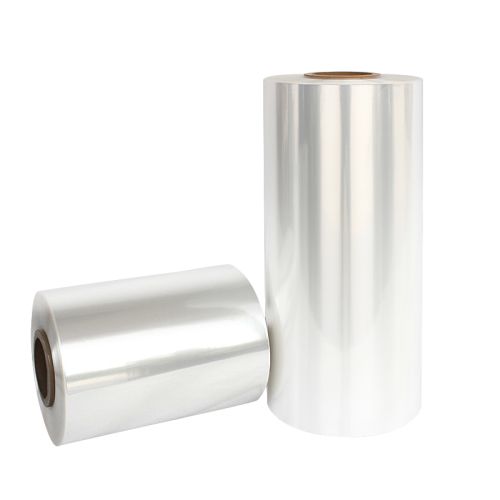
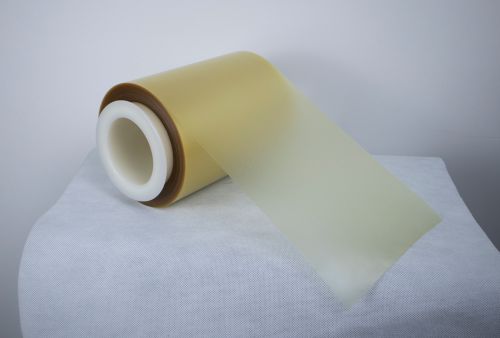
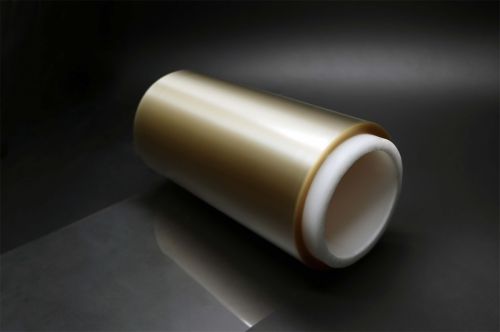
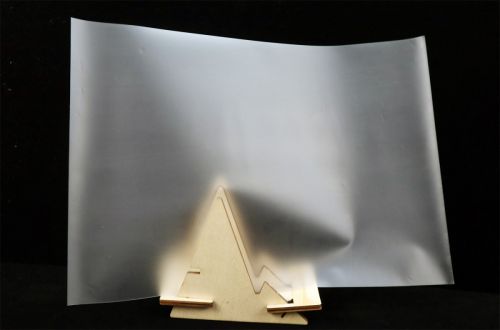
In an industrial power capacitor, BOPP Capacitor Film becomes the dielectric only after precision slitting, vacuum metallization and controlled winding. Nominal thickness is important, but roll profile, surface condition, thermal response and defect control determine whether the material can run efficiently. A procurement specification should therefore connect incoming film measurements with metallizer yield, winding stability and the electrical qualification of the finished capacitor.
Begin with the capacitor design window
After reviewing the Dafu functional film portfolio, give the film supplier the voltage class, capacitance target, element geometry, operating temperature, cooling and expected duty. These inputs determine the engineering margin and candidate gauge. The capacitor designer—not a generic article—must approve electrical stress and service-life assumptions.
For this industrial power capacitor winding project, document the proposed material, process settings, conditioning and acceptance limit before the trial. Keep retained samples so any change can be traced to film, conversion, filling or assembly rather than guessed after failure.
Thickness profile matters as much as average gauge
Gauge bands and cross-web variation can build uneven winding pressure, distort margins and create local stress. Specify how thickness uniformity will be sampled and reported. Review roll maps with winding defects so purchasing can distinguish random damage from a repeatable profile pattern.
The decision should be based on repeat production and the finished application. Supplier data are useful when the grade, method and conditions are stated; they should not be turned into an unsupported package, component or service-life guarantee.
Surface and roughness affect handling
The film surface must support de-winding, metallization and winding without excessive blocking or air entrapment. Too little or too much effective roughness can create different problems. Evaluate static, slip, roll hardness and tension with the actual line rather than copying a value from another process.
For this industrial power capacitor winding project, document the proposed material, process settings, conditioning and acceptance limit before the trial. Keep retained samples so any change can be traced to film, conversion, filling or assembly rather than guessed after failure.
Qualify the metallization interface
Base-film cleanliness, surface condition and thermal history influence electrode deposition. Record vacuum conditions, web speed, tension and coating pattern during trials. Inspect margins, adhesion and defect distribution before winding. A base film should not be approved solely from an uncoated dielectric measurement.
The decision should be based on repeat production and the finished application. Supplier data are useful when the grade, method and conditions are stated; they should not be turned into an unsupported package, component or service-life guarantee.
Control winding tension across the roll
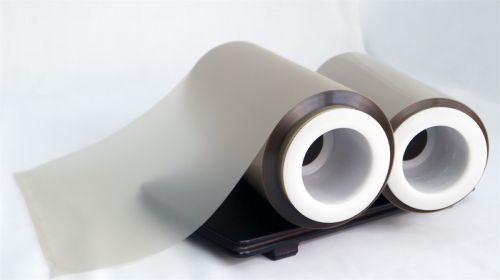
Ultra-thin webs react strongly to tension changes, edge quality and roll build. Establish starting settings conservatively, then assess wrinkles, telescoping, breaks and alignment. Slit edges deserve their own acceptance criteria because small damage can propagate during high-speed winding.
For this industrial power capacitor winding project, document the proposed material, process settings, conditioning and acceptance limit before the trial. Keep retained samples so any change can be traced to film, conversion, filling or assembly rather than guessed after failure.
Include thermal dimensional behavior
Heat during metallization, element treatment and service can change film dimensions and internal pressure. Request shrinkage data with exact conditions and test the selected grade in the real manufacturing sequence. Do not transfer a value from another thickness or temperature class without confirmation.
The decision should be based on repeat production and the finished application. Supplier data are useful when the grade, method and conditions are stated; they should not be turned into an unsupported package, component or service-life guarantee.
Inspect finished capacitor performance
The final approval should include the electrical, thermal and mechanical tests required by the capacitor design and customer standard. Trace results back to film lot, metallization batch, slit roll and winding machine. This evidence creates a useful supplier specification and supports corrective action.
For this industrial power capacitor winding project, document the proposed material, process settings, conditioning and acceptance limit before the trial. Keep retained samples so any change can be traced to film, conversion, filling or assembly rather than guessed after failure.
Build a repeatable purchasing package
Specify grade, thickness and tolerance, width, roll length, core, winding, surface, edge quality, cleanliness and documentation. Add sampling, change notification and retained-sample rules. A precise package reduces disputes and makes future qualification more efficient.
The decision should be based on repeat production and the finished application. Supplier data are useful when the grade, method and conditions are stated; they should not be turned into an unsupported package, component or service-life guarantee.
Frequently Asked Questions
Why not purchase capacitor film by thickness alone?
Profile, surface, defects, edges, roll build, thermal response and metallization behavior also affect winding and final performance.
Should electrical tests be repeated after metallization?
Yes. The electrode process and final element construction must be included in the capacitor maker's qualification.
Can one winding setting fit every gauge?
No. Gauge, width, surface, roll build and equipment influence the appropriate tension window.
What should be included in an RFQ?
Include design context, gauge, width, metallization, winding, temperature, roll and documentation requirements.
Recommended Product and Next Step
Define BOPP capacitor film through the metallizer and winding process instead of purchasing on nominal thickness alone.
CTA: Send Dafu your target thickness, slitting width, metallization process, winding speed, operating temperature and finished-capacitor qualification requirements to request a technical datasheet and samples.