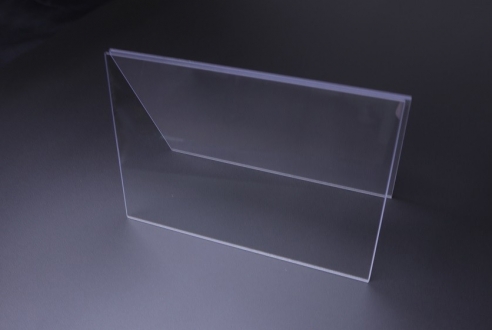
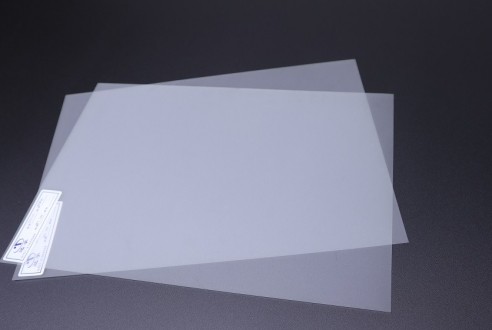
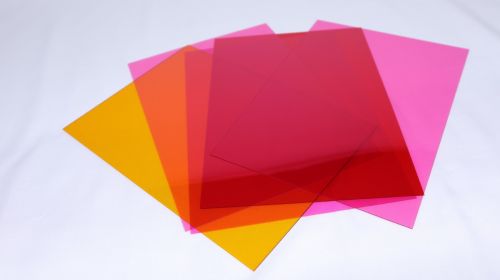
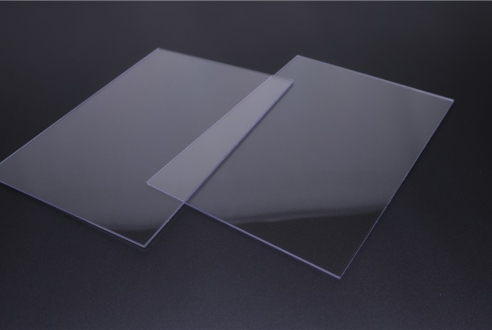
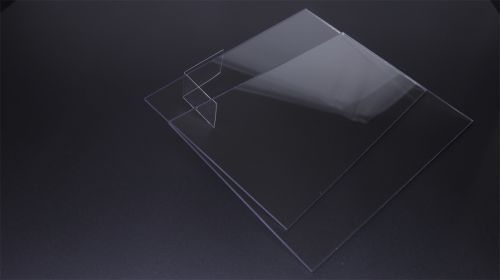
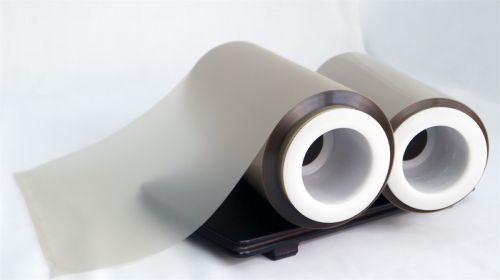
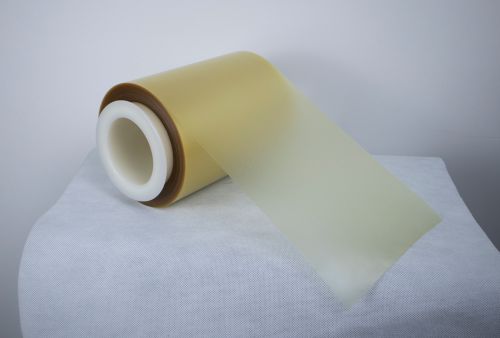
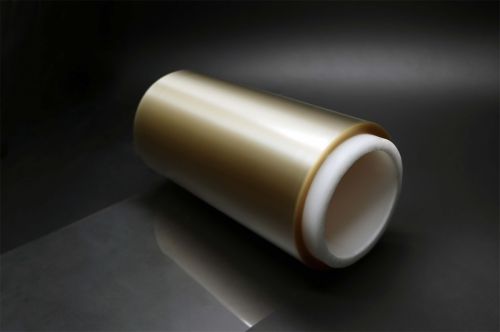
Selecting material for battery pack insulation parts starts with the failure the customer needs to prevent. In this project the central risk is edge damage, displacement and electrical risk. A data sheet can screen candidates, but it cannot reproduce the complete conversion process, package or component geometry, and service environment. flame-retardant PC film should therefore be evaluated as one part of a defined structure and a documented production trial.
Define the customer problem before choosing film
Write the requirement in terms of the finished application. State the expected service period, temperature and humidity exposure, mechanical handling, appearance needs, and any electrical or barrier function. This avoids choosing a material for a broad label while missing the test that controls customer acceptance. It also gives purchasing, engineering and the supplier the same basis for comparison.
Separate incoming-film requirements from converted-part requirements. Thickness, surface, winding and available material data belong in the raw-film specification. dimensions, dielectric behavior, edge condition and thermal cycling belong in the final approval plan. When these two levels are mixed, a passing roll can still produce an unreliable commercial result.
Assign a clear function to every layer
The proposed construction combines film, adhesive, busbar and enclosure. Each layer needs a stated job. One may provide print support or appearance, another protection or electrical separation, and another bonding or sealing. Asking one film to supply every function usually creates an unnecessarily heavy structure or leaves an important interface untested.
Draw the layer sequence and mark the treated, coated, printed and bonded sides. Confirm which surfaces touch each adhesive, ink, conductor or sealant. This simple map often exposes orientation mistakes before a line trial and makes later troubleshooting much faster.
Check compatibility at the interfaces
Many failures begin at an interface rather than inside the base film. Surface energy, treatment age, contamination, ink or adhesive chemistry, coat uniformity and cure can all change adhesion. Initial appearance or peel strength should not be the only release criterion because stress can develop during aging and temperature cycling.
Prepare representative coupons with production materials and settings. Condition them for agreed periods, then inspect the failure mode as well as the measured value. Film tear, adhesive split, coating transfer and clean release point to different causes and should not be reported as the same generic adhesion failure.
Protect performance during die cutting, forming, bonding and assembly
Conversion introduces heat, tension, bending, pressure, cutting and local strain. These effects can damage a functional surface, distort graphics, thin a formed region or create a weak edge. Machine settings should be recorded so that a change in performance can be connected to a real process event.
Use production-equivalent tooling and realistic speed where possible. Retain samples from the incoming roll and from each important stage. If a finished part fails, staged samples help the team determine whether the cause is material selection, processing, geometry or assembly instead of changing several variables at once.
Test representative finished parts
Flat coupons are useful for screening, but they do not include corners, seals, holes, folds, terminals, printed stacks or bonded edges. Build parts in the intended dimensions and expose them to realistic handling and environmental conditions. Include the actual product, substrate or assembly whenever it can influence the result.
Define acceptance criteria before testing. The plan for this application should cover dimensions, dielectric behavior, edge condition and thermal cycling. Record where and how a failure occurs, not only whether it passed. A consistent failure location can reveal a geometry or process issue that a stronger or thicker film alone will not solve.
Compare alternatives with controlled trials
When comparing films, keep the structure and process constant wherever practical. Document grade, thickness, surface, lot, ink or adhesive system, cure, machine settings and conditioning. Change one major factor at a time. Otherwise, the team cannot know whether an apparent improvement came from the film or from an uncontrolled process difference.
Supplier values should be compared only when test methods and conditions are stated. Do not invent a performance margin from an isolated number, and do not assume a polymer family or product name guarantees regulatory approval. Request current grade-specific documents when compliance is part of the project.
Information to include in a supplier inquiry
Share the application, layer structure, thickness range, surface requirement, conversion method, service environment and finished-part acceptance criteria. Describe the current material and the problem that triggered the search. This lets the supplier discuss a relevant grade instead of responding with a generic recommendation.
Request trial material representative of production and agree on the comparison plan before running it. The strongest purchasing decision is based on repeatable conversion and finished-part evidence. It shows that flame-retardant PC film can solve the defined customer problem without creating a new weakness elsewhere in the structure.
Frequently Asked Questions
Can raw-film data approve the final application?
No. Raw-film data are useful for screening, but the converted structure and finished part must be tested under relevant conditions.
Should the thickest grade be selected for safety?
Not automatically. Thickness affects processing, stiffness, forming, yield and cost. Select it from the required function and verified design margin.
Why inspect failure mode?
Failure location distinguishes material rupture from interface, process, seal, adhesive or geometry problems and directs the next trial efficiently.
What makes a supplier trial useful?
Use production-representative material, documented settings, agreed conditioning and measurable acceptance criteria for the complete part.
Conclusion
Translate battery-pack geometry and thermal-electrical risks into a converted insulation-part validation plan. Review Flame-Retardant PC Film and the related resources on Dafu special film portfolio and optical and PC film products. Then align the supplier, converter and customer around one structure, one process record and one finished-part qualification plan.