Step 1 — Define the Thermal Duty before Selecting a Grade
Ultra-thin heat-resistant BOPET film should not be selected by thickness alone. The first decision is the thermal duty of the finished component. Dafu offers temperature-resistance grades from 85°C to 125°C, giving buyers a defined range for matching the film to the application. The engineering team should describe normal operating temperature, maximum exposure, exposure duration, thermal cycling, neighboring heat sources, and whether mechanical or electrical load is present at the same time. A brief peak temperature and long continuous service are different conditions and should not be treated as equivalent.
The temperature rating of the film is also not automatically the rating of the complete assembly. Adhesives, printed layers, coatings, metal parts, and other insulating materials can have lower limits. Heat may change tension, flatness, bond strength, electrical behavior, or dimensional fit even when the film does not visibly melt. A useful qualification therefore starts with the entire stack. Choose a candidate grade within the verified 85°C to 125°C range, then test the real combination at the conditions that create the greatest functional stress.
Step 2 — Choose 2.0–8.0μm by Balancing Compactness and Process Margin
What Thinner Film Can Enable
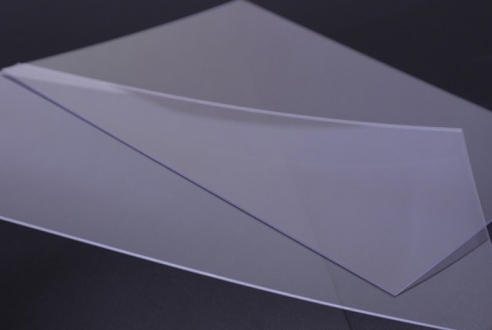
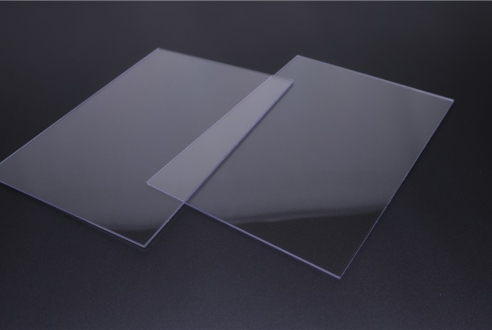
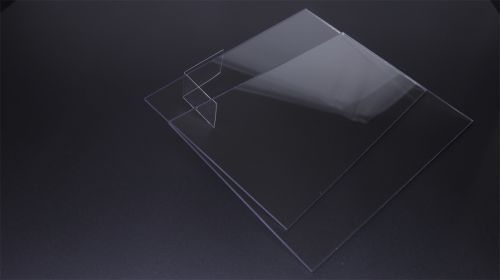
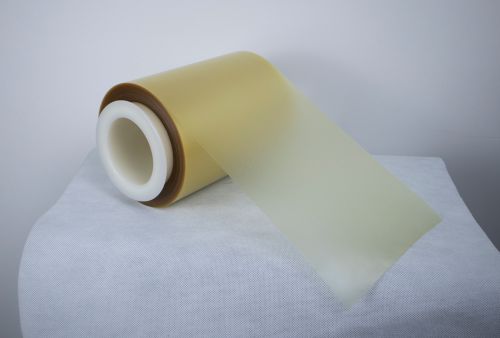
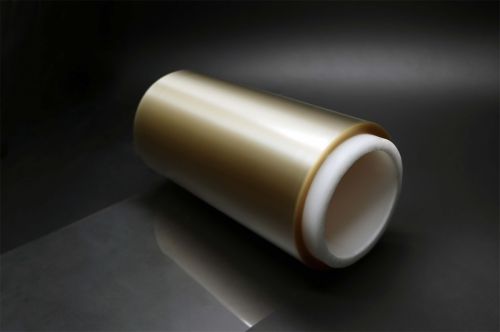
Dafu Ultra-Thin Heat-Resistant BOPET Film is available from 2.0μm to 8.0μm. Moving toward the thin end can help reduce layer build, weight, and occupied space in compact electronic, electrical, or precision components. More functional area may be available within a limited volume, and a designer may gain flexibility in a multi-layer structure. These benefits explain commercial search interest in 2 micron PET film and ultra-thin polyester film. However, the design advantage has value only when the converter can process the film consistently.
What Becomes More Sensitive
As thickness decreases, small changes in tension, roller alignment, static, particles, wrinkles, and edge condition become more important. Local damage represents a larger portion of the total cross-section. Very thin film may also be harder to unwind, guide, laminate, coat, die-cut, or place accurately. The buyer should not assume that the minimum available thickness is the optimum choice. A slightly thicker grade may provide more process margin and higher yield while still meeting the compactness target. Selection should compare finished-part performance and production stability at more than one thickness.
Step 3 — Match the Roll Format to the Equipment
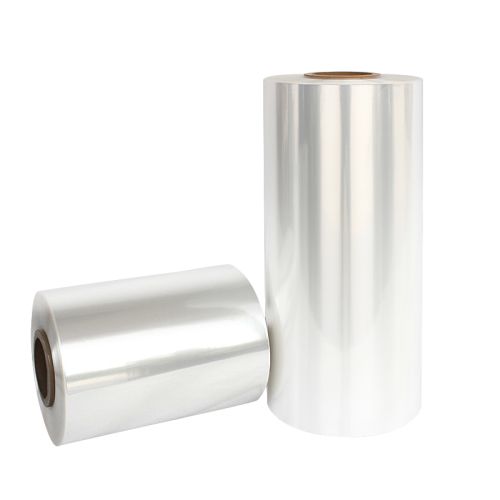
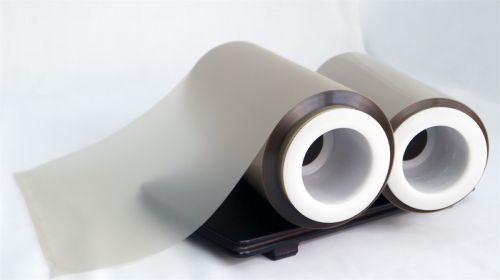
The verified slit widths for Dafu Ultra-Thin Heat-Resistant BOPET Film are 620, 920, and 1040 mm. Width choice affects trim, machine utilization, downstream slitting, material yield, and handling. Procurement should confirm whether the converter needs one of these slit widths directly or plans another slitting step. Core, roll diameter, winding direction, joint policy, packaging, and allowable edge condition should also be agreed during the commercial discussion, even when exact options require supplier confirmation.
Width is not merely a logistics field. A web that is wider than necessary can add trim waste or require equipment the converter does not have. A narrower roll may increase changeovers or reduce output. For ultra-thin film, every additional handling step introduces opportunities for wrinkles, contamination, telescoping, or edge damage. The lowest total-cost format is the one that moves through receiving, storage, slitting, processing, and component conversion with the fewest avoidable risks.
Step 4 — Use Stretching Capability as a Process Discussion
Sequential and Mechanical Simultaneous Stretching
Dafu has both sequential stretching and mechanical simultaneous stretching manufacturing capabilities. These production routes are relevant because orientation influences the balance of film properties, thickness control, transverse flatness, and handling behavior. Buyers do not need to choose a process name in isolation. They should explain the application and ask which film construction is appropriate for the required thickness, temperature grade, width, flatness, and downstream process. The supplier’s manufacturing route should support the specification rather than become a marketing label detached from performance.
Translate the Route into Measurable Receiving Criteria
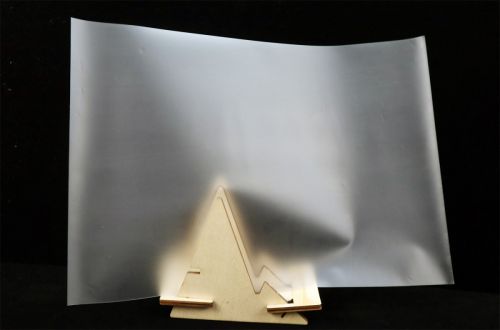
For the converter, the useful outputs are repeatable roll characteristics. Thickness uniformity, transverse flatness, edge quality, winding condition, cleanliness, and batch consistency determine whether a setup can be maintained over a complete roll. The RFQ and trial report should therefore describe what will be measured and how. Average thickness alone may hide local variation; a short trial may hide changes along the roll. Incoming inspection should connect measurement locations with downstream performance so that the buyer can identify which variables actually affect yield.
Step 5 — Build a Progressive Trial instead of One Pass/Fail Test
The most efficient qualification moves from low-cost checks to increasingly representative trials. Begin with documentation and visual inspection. Measure thickness and width, examine the roll and edges, and confirm storage condition. Next, run a controlled length at reduced speed to establish tension, static control, guiding, and contact points. Then increase to the planned operating speed and continue long enough to observe stability. Finally, process the film into the actual component and test it under thermal, mechanical, and electrical conditions relevant to use.
· Receiving stage: roll identification, packaging condition, width, thickness profile, visible defects, winding, and edges.
· Machine stage: unwind behavior, static, tension, tracking, wrinkles, breaks, contamination, and stable line speed.
· Conversion stage: coating, printing, lamination, metallization, die cutting, placement, or other intended operations.
· Component stage: dimensional fit, thermal exposure, mechanical stress, insulation function, and aging as applicable.
· Repeatability stage: representative rolls from more than one production batch before full commercial release.
Protect Ultra-Thin Film before It Reaches the Line
Storage and internal transport can determine whether an ultra-thin roll arrives at the machine in trial-ready condition. The buyer should follow agreed storage guidance, protect the film from moisture, dust, heat, direct sunlight, and physical impact, and allow rolls to stabilize when moved between significantly different environments. Forklift handling, stacking, damaged wrapping, and exposed edges can create problems that appear later as tracking or breakage. Keep the original label with the roll and use a clean, controlled unpacking area so traceability is not separated from the material.
Change control is equally important after approval. A new thickness, temperature grade, slit width, adhesive, coating, line speed, die geometry, or supplier process condition may affect the established window. The team should define which changes require document review, a limited confirmation run, or full requalification. This prevents gradual drift from the conditions that produced the approved result. For high-volume or critical components, retain test records and representative samples long enough to support trend analysis and root-cause investigation.
Step 6 — Calculate Cost per Accepted Component
Ultra-thin film changes the economics of a component in two directions. Less material and a thinner stack may create value, but difficult processing can increase scrap and downtime. Buyers should compare usable area per roll, trim loss, line speed, break frequency, set-up waste, defect rate, die-cut yield, inspection cost, finished-part yield, storage, and the value of compact design. Price per kilogram is especially misleading when different thicknesses provide very different areas and processing behavior.
A total-cost trial can compare two or three candidate thicknesses within the 2.0–8.0μm range. The thinnest grade may produce the smallest component, while another grade may deliver a better combination of handling and performance. The correct answer depends on the value of space, weight, reliability, and throughput in the customer’s product. Procurement, engineering, and production should review the same trial data so that a price advantage is not purchased at the expense of manufacturing stability.
Application Paths for Heat-Resistant Thin BOPET Film
Dafu Ultra-Thin Heat-Resistant BOPET Film can be evaluated for electrical insulation, compact electronic layers, precision die-cut components, protective wraps, and other uses that benefit from thin polyester film with controlled heat resistance. The exact application must determine the test plan. An insulation layer emphasizes electrical integrity and thermal aging; a precision component emphasizes dimensional control and clean cutting; a coated or metallized substrate emphasizes web behavior and surface condition. One generic data sheet cannot answer all of these questions.
If the film will be laminated, printed, coated, metallized, or bonded, the downstream process may expose it to heat and tension before the component enters service. That manufacturing exposure should be included in the thermal budget. Buyers should note maximum web temperature, dwell time, line speed, tension, and cooling. A film that meets the final operating temperature may still require process adjustment if a converting step creates a more severe short-term condition.
Release Criteria for International Buyers
Commercial release should be based on a controlled specification and a repeatable process window. The buyer should document the selected thickness and temperature grade, 620/920/1040 mm slit-width choice, roll requirements, inspection method, machine settings, component tests, storage rules, and traceability expectations. Deviations should trigger a defined review rather than an improvised decision on the production floor. This structure makes it easier to scale from samples to regular orders and to investigate any later change.
Dafu Ultra-Thin Heat-Resistant BOPET Film gives designers a verified 2.0–8.0μm thickness range, 85°C to 125°C temperature-resistance grades, three established slit widths, and access to sequential and mechanical simultaneous stretching capabilities. The strongest buying decision follows the six steps in order: define thermal duty, balance thickness and process margin, select the right roll format, connect manufacturing route to measurable criteria, validate progressively, and calculate cost per accepted component. That roadmap turns ultra-thin film from an ambitious specification into a manageable production material.