PEI Film Addresses More Than High-Temperature Exposure
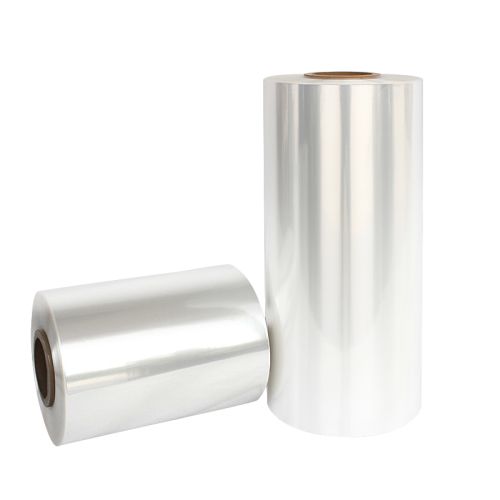
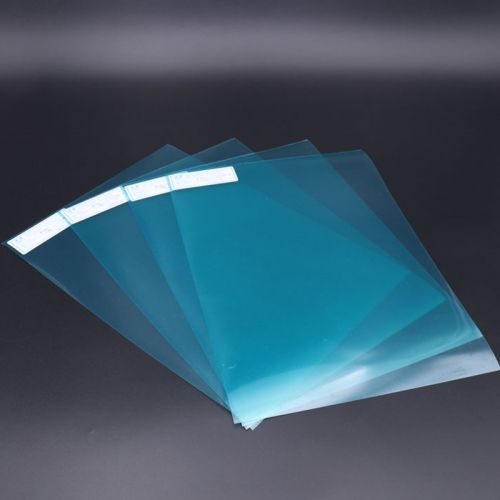
PEI Film is selected for reusable medical equipment when heat resistance must be combined with dimensional stability, mechanical reliability, and electrical insulation. Dafu PEI Film provides long-term heat resistance up to 170°C as well as resistance to creep and fatigue and inherent flame resistance.
Repeated steam sterilization is a demanding combination of heat, pressure, moisture, and cycling. A material may survive one exposure but gradually change dimensions, become brittle, lose bond strength, or develop surface defects after many cycles.
For international buyers, the correct question is not simply whether PEI Film can enter an autoclave. The question is whether the exact film grade, thickness, converted part, adhesive, printing, and assembly will retain required function through the customer’s complete sterilization program.
Define the Steam-Sterilization Program First
Temperature Alone Is Not a Complete Specification
Dafu PEI Film has long-term heat resistance up to 170°C. This provides useful thermal margin for demanding equipment, but the service temperature of the film is only one part of qualification.
Steam sterilization introduces saturated moisture and pressure as well as temperature. Heating and cooling rates, exposure time, drying, and repeated cycling all affect the component. A thick formed part may respond differently from a thin die-cut film, and a bonded assembly may be limited by the adhesive rather than the PEI.
Buyers should define:
Sterilization temperature and pressure
Exposure and drying time per cycle
Heating and cooling profile
Target number of reuse cycles
Cleaning chemicals used before sterilization
Mechanical load during and after the cycle
Required dimensions and visual appearance
Electrical or functional performance after cycling
The qualification plan should use the real program rather than a generic high-temperature test.
Repeated Cycles Reveal Progressive Change
Single-cycle testing can screen immediate failure, but reusable equipment requires repeated exposure. Thermal expansion and contraction can create stress at cut edges, folds, holes, printed areas, adhesive interfaces, or clamped points.
Inspections at several cycle intervals can reveal dimensional drift, cracking, delamination, warpage, or reduced mechanical or electrical performance before the intended reuse limit.
Dimensional Stability in Reusable Medical Components
Stable Dimensions Protect Fit and Function
Dafu PEI Film offers excellent dimensional stability. This is important for parts that must align with tools, trays, boxes, fasteners, sensors, or conductive components after repeated sterilization.
Small changes can affect fit, clearance, seal compression, electrical spacing, or assembly pressure. A flat sample may show little change while a formed component moves because of residual stress from cutting, folding, thermoforming, or bonding.
Buyers should specify nominal thickness, tolerance, width, flatness, cut dimensions, hole location, and allowable post-cycle change. Measurements should be taken in a conditioned state using a consistent method.
Forming and Residual Stress Matter
If PEI Film is formed, wrapped, folded, or clamped, the manufacturing process can introduce stress that becomes visible only after heat and steam cycling. Sharp corners, tight bends, and uneven cooling increase risk.
Production trials should evaluate thinning, springback, cracking, distortion, and dimensional repeatability. Finished parts should be sterilized and remeasured after conditioning.
Creep and Fatigue Resistance under Repeated Use
Creep is gradual deformation under sustained load, particularly at elevated temperature. Fatigue results from repeated mechanical or thermal stress. Dafu PEI Film provides resistance to both creep and fatigue, helping a component retain shape and function over repeated use.
Medical-equipment parts may be clamped, screwed, flexed, opened, closed, stacked, or handled between sterilization cycles. A film barrier or insulator that slowly changes thickness may alter clearance or pressure in the assembly.
Qualification should reproduce the real load and motion. Buyers should inspect thickness retention, permanent set, cracks, tear initiation, and edge condition. The design should distribute pressure evenly and avoid sharp hardware or burrs that create local stress concentrations.
PEI Film in Surgical-Tool Handles and Equipment
Functional and Insulating Components
PEI Film can be evaluated for functional or insulating parts within surgical-tool handles, reusable trays, sterilization boxes, and related equipment. Its electrical insulation can also be useful where instruments contain powered, sensing, or conductive elements.
Potential functions include electrical barriers, protective wraps, die-cut spacers, printed functional layers, or separation between components. The exact use depends on the device design and regulatory requirements.
PEI Film properties do not constitute approval of a medical device. The complete component must be assessed for its intended patient contact, cleaning, sterilization, electrical function, and market requirements.
Cleanability and Surface Condition
Cleaning agents and handling can affect surfaces, printing, and bonds. Buyers should test representative chemicals at the intended concentration, temperature, and exposure time, then inspect scratching, discoloration, swelling, cracking, residue, and bond strength. Cleaning and steam exposure should also be tested in sequence.
Bonding and Lamination for Sterilizable Components
The Adhesive Can Be the Limiting Layer
A PEI film may retain its properties while an adhesive softens, absorbs moisture, loses strength, or changes appearance. Bonding trials should use the actual substrate, adhesive chemistry, coating weight, cure conditions, and component geometry.
Evaluation should include initial bond, fully cured bond, and bond strength after repeated cleaning and steam cycles. Inspect the failure interface to determine whether separation occurs at the PEI surface, adhesive, companion material, ink, or coating.
Surface preparation may be needed depending on the adhesive system. Buyers should not assume that a bond proven on another polymer will perform identically on PEI.
Printing and Marking Durability
Reusable equipment may carry identification, instructions, symbols, or traceability marks. Printing must remain readable and attached after handling, cleaning, steam, and abrasion.
Trials should evaluate ink adhesion, legibility, color change, gloss, and wear at realistic cycle intervals. Printed zones near folds, holes, or formed corners deserve special attention because strain may weaken the ink or coating.
Cutting, Punching, and Edge Quality
PEI Film may be slit, die-cut, punched, folded, or formed into parts. Clean edges are important because notches, burrs, and microcracks can grow under repeated mechanical and thermal cycling.
Converters should use sharp tooling and stable alignment. Incoming and in-process inspection should check:
Thickness and flatness
Hole and slot accuracy
Burrs and rough edges
Cracks at corners or narrow bridges
Surface scratches and contamination
Part orientation and identification
Protective packaging after conversion
The minimum bend radius and narrowest safe feature should be established through production and sterilization trials rather than assumed from a flat data sheet.
Electrical Insulation after Sterilization
Dafu PEI Film provides electrical insulation, which may be relevant to powered instruments, control components, or equipment containing conductive parts. Electrical reliability should be qualified in the final geometry.
Holes, folds, edges, moisture, contamination, and assembly pressure can concentrate electrical stress. Buyers should define operating and peak voltage, required insulation thickness, clearance, creepage distance, and acceptable post-cycle performance.
Electrical testing should be performed after cleaning and repeated sterilization when those exposures are part of service. A dry, unused flat sample cannot represent the final component.
Inherent Flame Resistance and Finished-Assembly Evaluation
PEI Film has inherent flame-resistant characteristics. This can be valuable in electrical or powered medical equipment where reducing ignition and flame-spread risk matters.
However, a general flame-resistance description does not prove a specific classification. Results depend on grade, thickness, orientation, test method, and neighboring materials. Adhesives, inks, coatings, and companion parts can change the behavior of the assembly.
Buyers should request the documentation applicable to the exact supplied grade and should test the finished component under the required standard.
Quality Consistency for International Buyers
Reusable medical-equipment projects require repeatable material and part quality. Important incoming checks may include thickness, width, flatness, surface defects, edge condition, roll or sheet formation, cleanliness, and batch identification.
Supplier questions should include:
What long-term temperature capability applies to the supplied PEI Film?
Which thicknesses and formats are available for evaluation?
How are thickness, flatness, and surface quality controlled?
What electrical and mechanical information is available for the exact grade?
What storage and handling conditions are recommended?
Can samples support die-cutting, bonding, and sterilization trials?
How is each production batch identified?
The buyer should share the sterilization program, cleaning chemistry, geometry, mechanical load, voltage, printing, adhesive, and target cycle count. This information is essential for a meaningful trial.
Lifecycle Cost of PEI Film
PEI Film is more specialized than common packaging or insulation films, but purchase price should be compared with the cost of the finished reusable component.
The calculation should include material yield, cutting or forming, scrap, bonding, inspection, qualification, expected reuse cycles, cleaning, maintenance, replacement, and failure risk. A material that retains dimensions and function through more cycles may reduce lifecycle cost even if its raw price is higher.
PEI should also not be over-specified. The correct material is the lowest-total-cost option that reliably meets the actual heat, steam, mechanical, electrical, and regulatory requirements.
Recommended Qualification Process
Begin with a written requirement matrix covering sterilization, cleaning, thermal exposure, dimensions, mechanical load, electrical function, printing, bonding, and acceptance criteria. Select the representative PEI Film thickness and final component geometry.
Run production-intent cutting, forming, printing, bonding, and assembly trials. Measure the component before exposure, then subject it to the intended cleaning and sterilization sequence.
Inspect at planned cycle intervals for dimensions, cracks, edge damage, surface condition, bond strength, marking durability, mechanical function, and electrical performance. Repeat critical tests on representative material batches. Commercial approval should be based on the finished component and intended reuse program.
Conclusion
Dafu PEI Film combines long-term heat resistance up to 170°C with dimensional stability, resistance to creep and fatigue, electrical insulation, and inherent flame resistance. These properties make it relevant to reusable medical-equipment components exposed to repeated high-temperature and high-pressure steam sterilization.
Reliable use depends on system-level qualification. Buyers who define the sterilization and cleaning program, control forming and edge quality, validate adhesives and printing, and test the finished component across repeated cycles can determine whether PEI Film provides the stability and lifecycle value required by reusable equipment.