Why PC/PMMA Film and Sheet Is Used for Display Protection
Display covers and transparent decorative parts must satisfy several demands at once. They need high clarity, a smooth premium appearance, resistance to scratches, impact protection, thermal stability, accurate printing, and efficient forming.
One material rarely provides every characteristic equally. PMMA offers attractive optical clarity and surface hardness but may not provide the impact resistance required for demanding mobile and automotive applications. PC offers toughness and heat resistance but may require improved surface performance for exposed display covers.
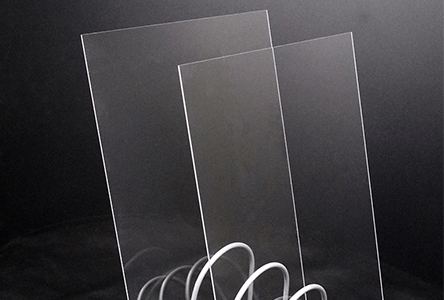
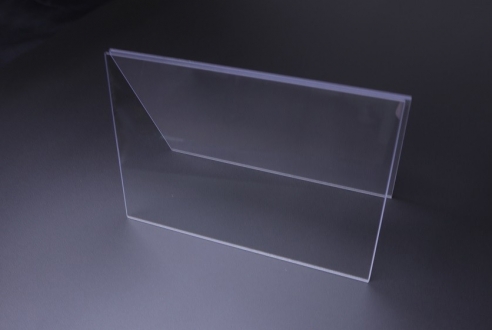
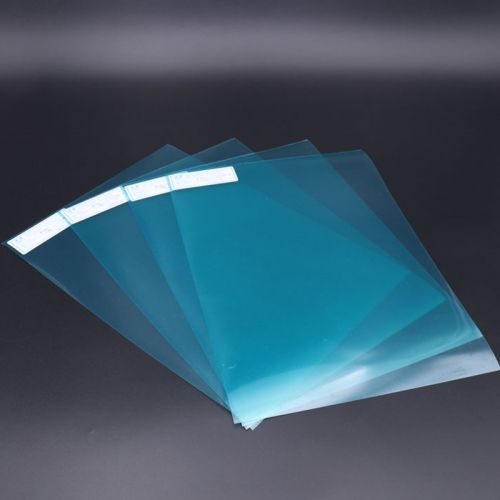
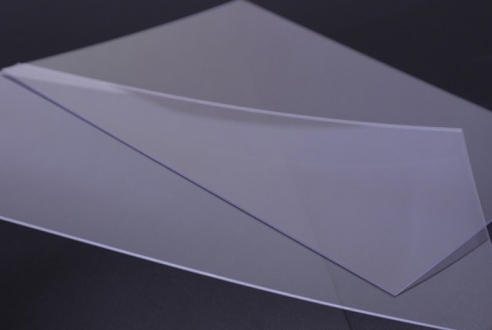
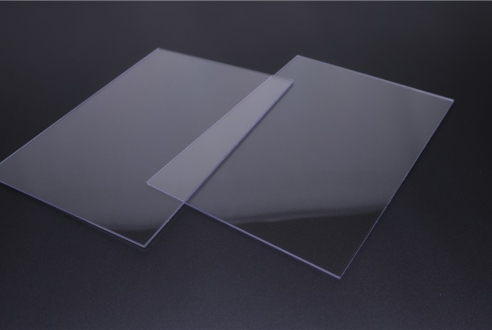
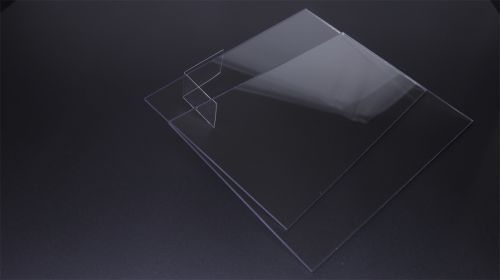
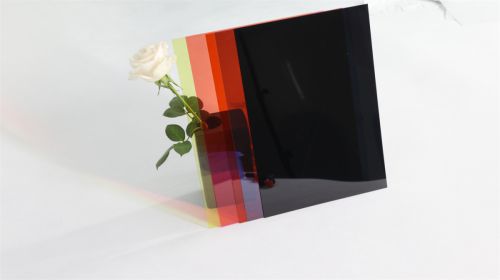
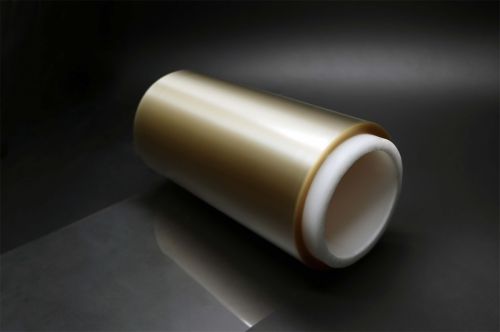
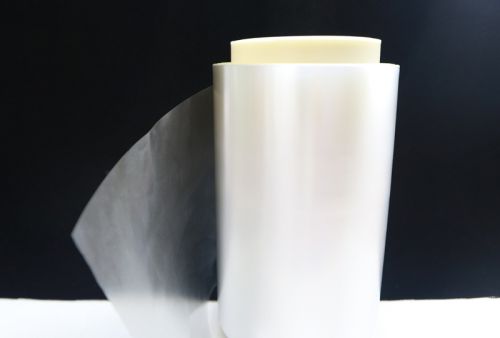
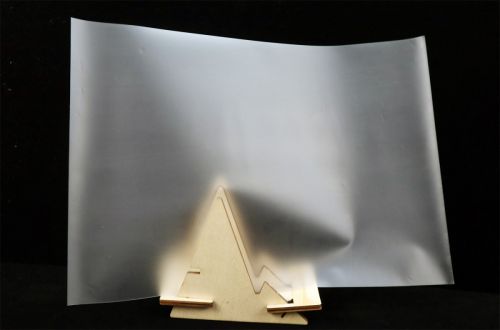
PC/PMMA Film and Sheet combines these functional strengths in one composite material. Dafu PC/PMMA provides light transmission up to 92%, surface hardness above 3H, impact strength eight to ten times that of ordinary PMMA, and heat-deflection temperature above 130°C.
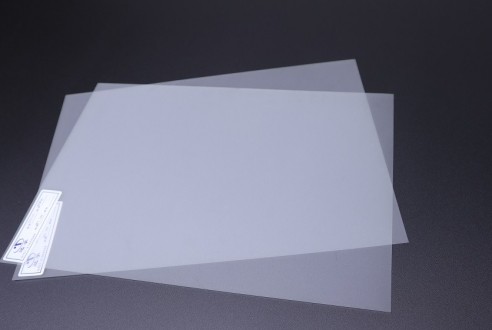
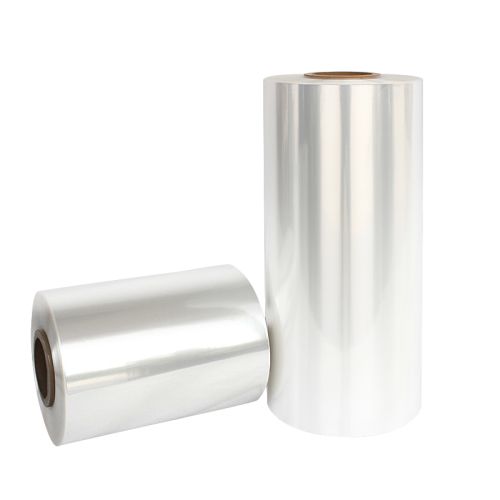
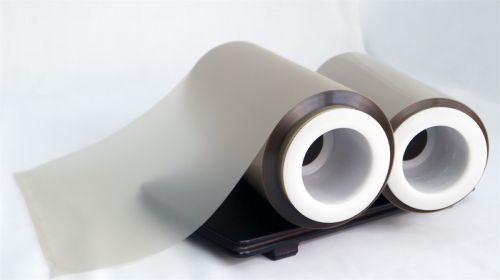
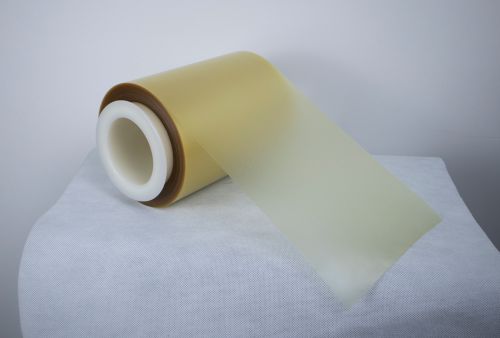
It is available from 0.07 mm to 3 mm thick and in widths above 1320 mm. This broad range supports thin films, formed components, display covers, and larger decorative panels.
The procurement challenge is to turn these headline properties into stable production. Buyers should define optical, mechanical, dimensional, and processing requirements for the final component rather than approving the material from a flat sample alone.
Understanding the PC/PMMA Composite Concept
PC/PMMA Film and Sheet combines polycarbonate and polymethyl methacrylate so the finished material can benefit from the distinct strengths of both polymers.
The PC side supports impact strength, toughness, and heat resistance. The PMMA side contributes optical appearance and surface hardness. The exact layer arrangement and intended processing side should be confirmed for the selected product.
Buyers should not assume that every PC/PMMA composite has identical performance. Thickness, layer ratio, surface treatment, color, coating, and production method can influence optical behavior, forming, adhesion, and impact resistance.
The supplier should understand whether the material will be used as a flat window, formed cover, printed decoration, in-mold component, protective layer, or structural panel. This function determines which surface faces outward and which processes follow.
Light Transmission Up to 92% and Real Display Quality
Dafu PC/PMMA provides light transmission up to 92%, supporting bright and clear display presentation. High transmission is especially important for automotive screens, mobile-device components, optical windows, and backlit control panels.
However, transmission alone does not define visual quality. A material can transmit substantial light and still show haze, distortion, color shift, surface waves, particles, or thickness variation.
Buyers should define:
Total light transmission
Haze
Color or yellowness
Image distortion
Gloss and reflection
Surface waviness
Visible particles and gels
Optical behavior after forming
Appearance after printing and bonding
Testing should use the actual display, illumination, and background. A sample that looks clear on a white table may reveal defects over a black screen or bright backlight.
The complete component may include inks, adhesives, coatings, anti-glare treatments, and protective films. Each layer can affect transmission and haze, so final optical approval should follow full processing.
Surface Hardness Above 3H and Scratch Resistance
Display covers are touched, cleaned, stacked, transported, and exposed to everyday abrasion. Surface hardness is therefore a major purchasing criterion.
Dafu PC/PMMA provides surface hardness above 3H. This gives the material improved resistance to scratches compared with softer unprotected plastic surfaces.
Hardness should not be treated as a universal guarantee against all damage. Test method, pencil type, load, angle, surface treatment, and conditioning influence the result. Real products may face sand, keys, cleaning cloths, chemicals, and repeated wiping.
Buyers should evaluate:
Pencil hardness under the agreed method
Abrasion after repeated cycles
Scratching during forming and handling
Resistance to cleaning chemicals
Gloss and haze change after wear
Compatibility with optional hard coatings
Protective masking should remain on the surface during slitting, printing, forming, and assembly whenever practical. The masking adhesive must release cleanly without residue or optical marks.
Impact Strength Eight to Ten Times Ordinary PMMA
Dafu PC/PMMA offers impact strength eight to ten times that of ordinary PMMA. This is valuable for mobile-device covers, automotive displays, industrial interfaces, and decorative parts exposed to drops, vibration, or assembly pressure.
Impact performance depends on more than the base material. Thickness, component shape, support structure, temperature, mounting method, cutouts, and edge quality all influence the result.
A flat impact test may not represent a formed cover with sharp corners, holes, or clips. Stress can concentrate around screw locations, adhesive edges, and narrow bridges.
Buyers should test the actual component for drop, ball impact, puncture, flexing, and mounting stress. Low-temperature impact may also be relevant for automotive and outdoor equipment.
Good design supports the material. Rounded corners, clean edges, gradual formed transitions, and even support can reduce the risk of cracking.
Heat-Deflection Temperature Above 130°C
Dafu PC/PMMA provides heat-deflection temperature above 130°C. This supports components exposed to elevated processing or service temperatures, including automotive interiors and electronics.
Heat-deflection temperature should not be confused with a universal continuous-use temperature. It is a test-based indication of how a material deforms under defined load and heating conditions.
Buyers should separately define:
Normal operating temperature
Maximum short-term exposure
Forming and drying temperature
Adhesive curing temperature
Sun-loaded interior conditions
Thermal cycle count
Mechanical load at temperature
Acceptable warpage and dimensional change
The completed part should be tested after printing, forming, coating, and bonding. Different layers can expand at different rates and create curl, stress, or delamination.
Automotive qualification should reproduce cold starts, cabin heat, sunlight, humidity, and repeated cycling rather than relying on one static temperature point.
Selecting Thickness from 0.07 mm to 3 mm
Dafu PC/PMMA is available from 0.07 mm to 3 mm. This range allows designers to choose between flexible films, semi-rigid formed components, and thicker protective covers.
Thin material can reduce weight and fit compact assemblies, but it may be more sensitive to curl, handling damage, and dimensional variation. Thicker material can improve rigidity and impact protection but may require more forming energy and add component weight.
Selection should consider:
Required stiffness
Impact requirement
Forming depth
Display size
Mounting method
Optical distortion tolerance
Printing and coating process
Die-cutting or machining
Target component weight
Production yield
The best thickness is the lowest value that reliably meets the complete mechanical, optical, and processing requirement. Prototype parts should be produced in more than one thickness when design margins are uncertain.
Printing and Decorative Integration
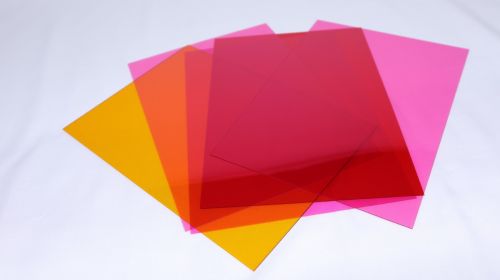
PC/PMMA Film and Sheet can support printed borders, icons, logos, textures, color layers, and backlit graphics for display covers and decorative panels.
Printing trials should evaluate ink adhesion, opacity, color accuracy, registration, drying, and resistance to heat, humidity, and cleaning. Black borders over bright displays require careful density control because pinholes and thin areas become visible.
If the printed material will be thermoformed, inks must tolerate stretching. Graphics may require pre-distortion so they appear correct after forming. The printing side and outward PMMA surface should be clearly defined.
Adhesion should be tested immediately and after aging. A visually acceptable print can still fail after forming, chemical exposure, or thermal cycling.
Thermoforming and Dimensional Accuracy
Forming converts flat PC/PMMA material into curved display covers, decorative components, or three-dimensional panels. Temperature, heating uniformity, tooling, draw ratio, and cooling influence the finished quality.
Insufficient heating can create high stress or poor definition. Excessive heating can change surface appearance, dimensions, or optical performance. Sharp tooling transitions may concentrate stress or thin the material excessively.
Converters should evaluate:
Heating profile and time
Forming depth and draw ratio
Tool surface quality
Corner radii
Thickness distribution after forming
Optical distortion
Printed-graphic position
Trim and hole accuracy
Springback and warpage
Production-scale trials are important because laboratory forming may not reproduce the cycle time, heating uniformity, and tension of commercial equipment.
Bonding, Lamination, and Optical Cleanliness
When PC/PMMA is bonded over a display or sensor, the adhesive becomes part of the optical system. Dust, bubbles, uneven coating, or incompatible refractive behavior can reduce clarity.
Buyers should evaluate adhesive wetting, transparency, haze, yellowing, bond strength, thermal aging, and humidity resistance. The adhesive should not generate stress that leads to warpage or optical distortion.
Cleanliness standards should match the application. A tiny particle may be acceptable in a hidden decorative area but highly visible over an illuminated display.
The buyer and supplier should agree on inspection lighting, viewing distance, defect zones, acceptable particle size, scratch limits, and reference samples.
Quality-Control Priorities
International buyers should establish measurable acceptance criteria for:
Light transmission and haze
Surface hardness
Visible defects and scratches
Thickness and width tolerance
Cross-web optical uniformity
Flatness, curl, and warpage
Layer or surface orientation
Protective masking
Edge and cut quality
Batch identification and traceability
Approved reference and boundary samples can reduce subjective disagreements. The critical display area may require tighter limits than printed borders or hidden mounting regions.
Questions to Ask a PC/PMMA Supplier
Buyers should ask:
How are 92% transmission and above-3H hardness measured?
How is the eight-to-ten-times PMMA impact comparison defined?
Which thicknesses from 0.07 mm to 3 mm are available?
What usable widths above 1320 mm can be supplied?
Which side is intended for printing, forming, or outward exposure?
What forming and drying conditions are recommended?
How are optical defects inspected and classified?
Which inks, adhesives, and coatings have been evaluated?
Can samples be supplied for full-process trials?
How are batch consistency and traceability controlled?
The supplier should receive the display size, component geometry, thickness, processing route, optical standard, environmental conditions, and target service life.
Conclusion
Dafu PC/PMMA Film and Sheet combines light transmission up to 92%, surface hardness above 3H, impact strength eight to ten times ordinary PMMA, and heat-deflection temperature above 130°C. Thicknesses from 0.07 mm to 3 mm and widths above 1320 mm support diverse display and decorative designs.
Reliable mass production depends on more than the headline data. Buyers should validate optical quality, impact, forming, printing, bonding, cleanliness, dimensional control, environmental aging, and component yield.
With precise specifications and production-scale trials, PC/PMMA Film and Sheet can provide the clarity, surface durability, toughness, and customization required by modern automotive, mobile, and industrial display systems.