Every engineer, procurement manager, and production planner knows the frustration: you specify a transparent flame-retardant film, only to be hit with a cascade of problems that delay launches, inflate costs, and compromise safety. From hazy panels that obscure component inspection to films that curl after soldering, the road to reliable electrical insulation is littered with compromises. This article tackles the six most painful challenges head‑on – and shows exactly how the DFPCR11, DFPCR12, and DFPCR24 series of transparent flame‑retardant PC films turn each headache into a competitive advantage.
Pain Point #1: “Flame Retardant Means Opaque or Yellow” – The Clarity Sacrifice
Many flame‑retardant additives are inherently opaque or tend to yellow the polymer over time. The result? You get a UL94‑rated material, but you lose the ability to visually inspect solder joints, LEDs, or component markings through the insulation layer. This forces you to either cut inspection windows (weakening the barrier) or rely on costly X‑ray equipment.
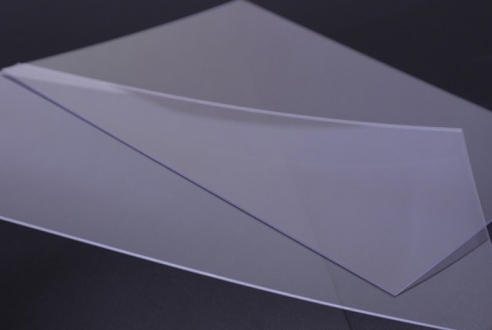
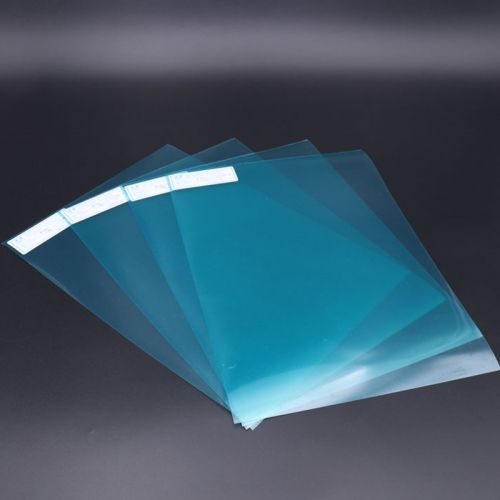
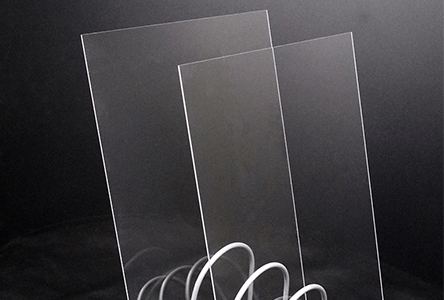
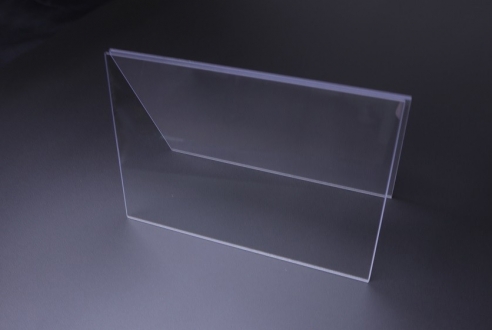
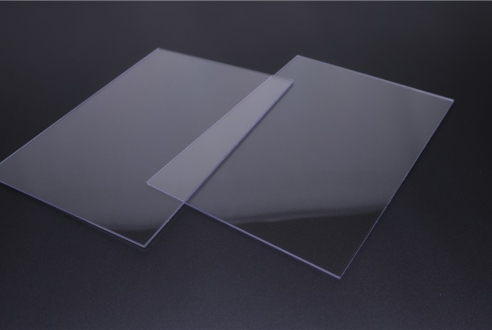
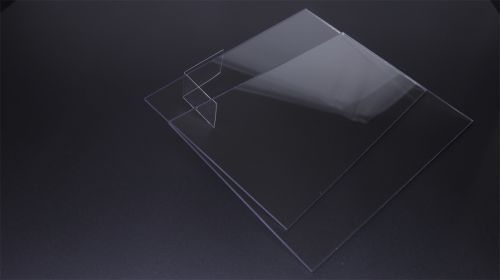
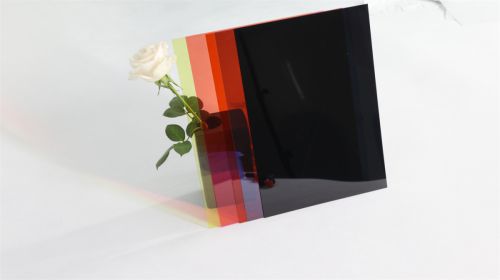
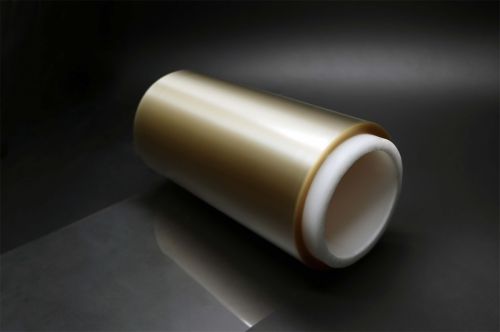
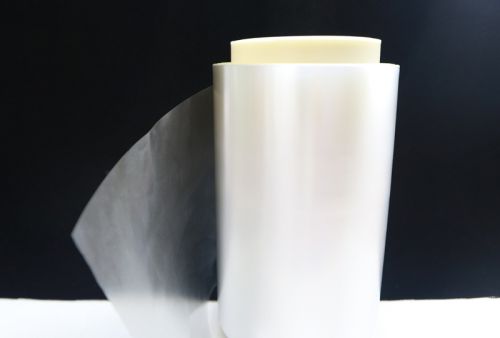
The DFPCR solution: Our transparent flame‑retardant PC film achieves >88% light transmission per ASTM D1003 – that’s water‑clear, not milky or amber. The DFPCR11 (polished/polished) delivers optical‑grade transparency for displays and touch panels, while DFPCR12 and DFPCR24 offer matte options without compromising transmission. You get true UL94 VTM‑0 and V‑0 fire safety and see‑through clarity, so maintenance and quality control become visual, intuitive, and fast.
Pain Point #2: “It Passes UL94 – But Only at 0.5 mm; Thinner Gauges Fail”
Standard flame‑retardant films often lose their V‑0 rating when you drop below a certain thickness, forcing you to use unnecessarily thick material that adds weight, reduces flexibility, and increases raw material costs. For miniaturized electronics, every micron counts.
The DFPCR solution: All three grades – DFPCR11, DFPCR12, and DFPCR24 – are certified VTM‑0 (for thin films) and V‑0 for thicknesses above 0.25 mm (10 mils). That means even our 0.125‑mm ultra‑thin film meets the stringent self‑extinguishing criteria with no flaming drips. You can confidently choose the lightest, thinnest gauge for your design without sacrificing safety, reducing material usage and shipping weight – a direct cost saving.
Pain Point #3: “Thermal Shrinkage Warps My Parts After Reflow Soldering”
Nothing is more infuriating than a perfectly die‑cut insulation sheet that curls, buckles, or shrinks away from its intended position after exposure to 135°C reflow or wave soldering. This not only compromises electrical clearance but also causes assembly jams and rework. Many films specify “low shrinkage” but in reality shift by 2–3% – enough to misalign critical barriers.
The DFPCR solution: Our transparent flame‑retardant PC film exhibits ≤1% thermal shrinkage (strain relief at 135°C per ASTM D1204). This exceptional dimensional stability comes from the proprietary polymer formulation and stress‑relief manufacturing process. Whether you use it as a layer between primary and secondary circuits or as a cover for power modules, the film stays flat, in place, and dimensionally accurate – even after multiple heat cycles. No more warping, no more touch‑up labor.
Pain Point #4: “Thickness Tolerance Is All Over the Place – My Stamping Dies Keep Jamming”
In high‑speed automated lamination and punching lines, inconsistent film thickness is a productivity nightmare. Thicker spots cause die wear and misfeeds; thinner spots compromise dielectric strength. Many suppliers offer tolerances of ±20‑30% of nominal thickness, which is unacceptable for precision applications.
The DFPCR solution: We enforce tight gauge variation: ±10 µm for d<0.25 mm, ±15 µm for 0.25<d≤0.5 mm, ±25 µm for 0.5<d<1.2 mm, and ±35 µm for d=1.2 mm. These are absolute values, not percentages, ensuring that your rolls feed uniformly through automatic blanking equipment. The result? Less scrap, longer tool life, and consistent insulation performance across millions of parts.
Pain Point #5: “Surface Finish Doesn’t Match My Bonding or Printing Requirements”
You need a glossy side for readability and a matte side for adhesive anchorage – but the film comes as either all‑glossy or all‑matte, forcing you to apply extra coatings or risk delamination. Anti‑glare surfaces often diffuse light too much, reducing backlight efficiency.
The DFPCR solution: We offer three tailored textures:
- DFPCR11 – polished/polished (glossy both sides) for maximum clarity and smoothness.
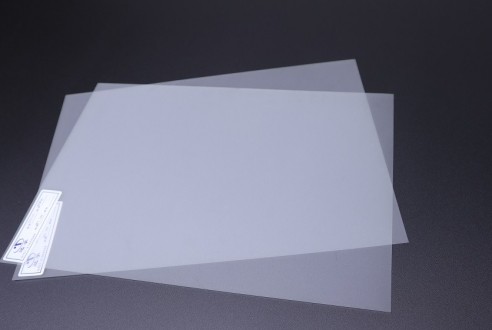
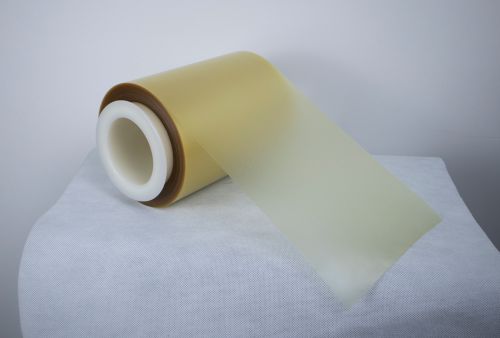
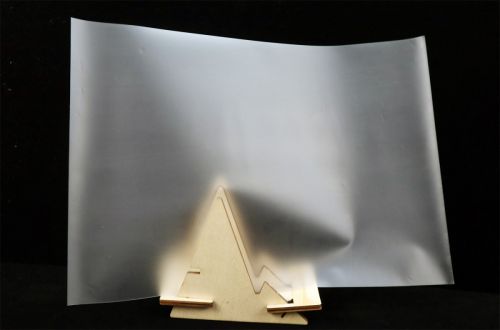
- DFPCR12 – polished/matte – one high‑gloss side for optical clarity, one matte side for easy printing, coating, or lamination with double‑sided tapes.
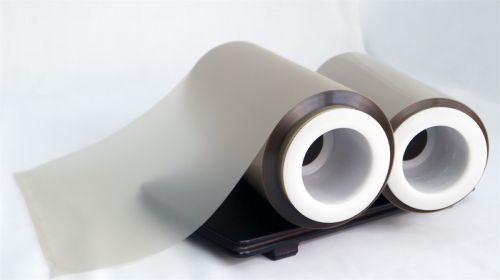
- DFPCR24 – matte/velvet (medium sand) – ideal for reducing glare on displays and providing a non‑slip surface for manual handling.
You no longer have to choose between function and processability. Pick the texture that exactly matches your production line and end‑use environment – no extra surface treatment needed.
Pain Point #6: “I’m Stuck Between Flame Retardancy and Environmental Regulations”
Many legacy flame‑retardant films rely on brominated or chlorinated compounds that, while effective, are increasingly restricted under RoHS, REACH, and TSCA. The fear of non‑compliance looms large, and switching to a “green” alternative often means sacrificing fire performance.
The DFPCR solution: Our transparent flame‑retardant PC film is fully RoHS‑compliant – with non‑detectable levels of Pb, Hg, Cd, Cr⁶⁺, PBBs, PBDEs, PFOS, and PFOA. It meets the strictest global environmental standards without compromising on UL94 V‑0. Moreover, the polymer itself is halogen‑free (although the additive system is proprietary, it is verified to be environmentally safe). You get a material that protects both people and the planet – no trade‑off.
Bonus Pain Point: “Electrical Breakdown Happens at the Worst Possible Time”
Some films claim high dielectric strength but fail when humidity or temperature changes. Our DFPCR series maintains >20 KV/mm (at 10 mils), volume resistivity >1×10¹⁸ Ω·cm, and surface resistivity >1×10¹⁵ Ω under ASTM test conditions – and these values remain stable across a wide range of environmental conditions, thanks to the low moisture absorption (0.23% equilibrium, 24 hrs). No sudden breakdowns, no field failures.
Why the DFPCR Series Is the Ultimate Antidote to Your Insulation Headaches
The DFPCR11, DFPCR12, and DFPCR24 transparent flame‑retardant PC films are not just a list of specifications – they are a systematic solution to the real‑world pains that engineers face daily. Let’s recap how each grade directly addresses your operational struggles:
| Pain Point | DFPCR Solution |
|---|
| Poor transparency | >88% light transmission, water‑clear |
| Thinner gauges lose UL94 | VTM‑0 and V‑0 down to 0.125 mm |
| Warpage after soldering | ≤1% shrinkage at 135°C |
| Inconsistent thickness | Tight absolute tolerances (±10 to ±35 µm) |
| Wrong surface finish | Three textures: glossy, matte, velvet |
| Environmental compliance | RoHS, REACH, PFOS/PFOA free |
| Dielectric instability | High KV/mm, stable resistivities |
Real‑World Applications Where Pain Points Are Eliminated
- Power supply manufacturers – stop worrying about barrier displacement due to shrinkage; our film stays put, ensuring creepage and clearance distances remain intact.
- TV and monitor producers – eliminate cloudy backlight units; our high‑transmission film delivers uniform luminance while meeting UL94 V‑0 for safety.
- Aircraft interior designers – reduce weight with our thin gauges without losing flame retardancy or clarity for instrument panels.
- Automotive battery pack engineers – rely on our dimensional stability in high‑temperature charging cycles, preventing short circuits.
The Bottom Line: Stop Suffering, Start Solving
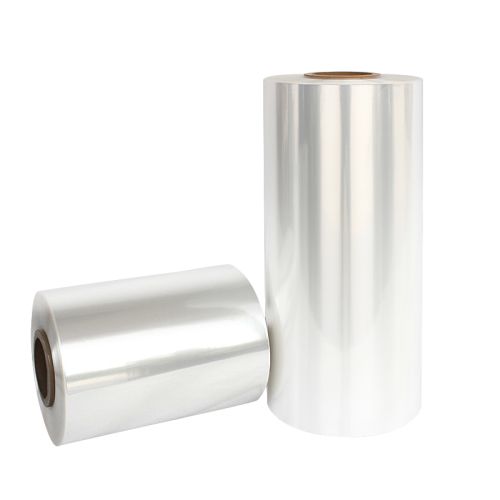
You have enough challenges – supply chain disruptions, tight deadlines, cost pressures. Your insulation material shouldn’t add to the list. With the DFPCR11, DFPCR12, and DFPCR24 transparent flame‑retardant PC films, you eliminate the trade‑offs that have plagued your projects. Clarity, fire safety, thermal stability, processing precision, surface versatility, and green compliance – all in one roll.
It’s time to move away from the frustration of “good enough” and embrace a material that was engineered with your pain points in mind. Contact your local distributor today for samples and technical support. Experience the difference – where every specification is a solution, not a compromise.