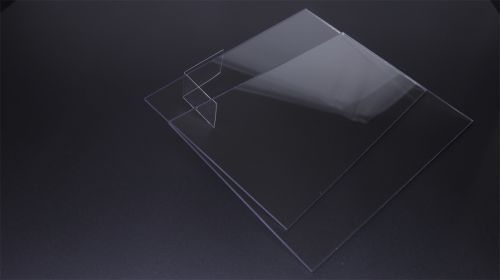
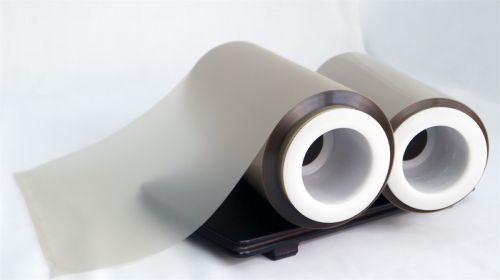
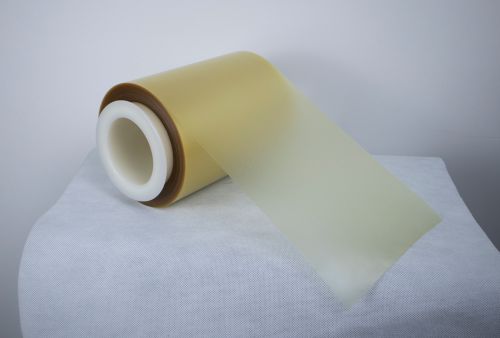
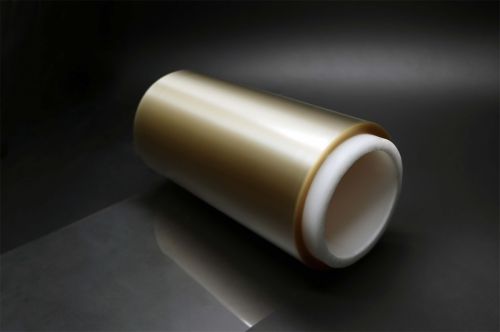
A thin charger insulation part must retain electrical separation and position around heat, fasteners, edges and environmental exposure. Buyers in this market can review Flame-Retardant PC Film as a candidate, then use the Dafu functional film portfolio to understand related options. The purchase decision still depends on a clear application brief, compatible conversion process and evidence from the finished insulation barriers inside EV charging equipment.
Finished-Part or Package Validation: Map voltage zones, conductive surfaces, creepage
Map voltage zones, conductive surfaces, creepage paths, clearances and possible edge contact before drawing the insulation part.
For insulation barriers inside EV charging equipment, document the proposed film grade, thickness, interface materials, equipment settings and acceptance limits before the trial. Retain samples from each important stage so a later change can be traced to the incoming web, conversion, filling or assembly instead of being assigned to the film without evidence.
Procurement Questions for Film Suppliers: Confirm the exact flame-retardant PC grade,
Confirm the exact flame-retardant PC grade, thickness and current supporting documents rather than applying a family-level rating.
The supplier data must identify the test method and conditions. Compare only equivalent results, and do not convert a laboratory value into an unsupported shelf-life, safety or service-life promise. The customer responsible for the finished product should approve the final test plan and engineering margin.
Commercial Approval and Change Control: Design radii, slots, holes and folds
Design radii, slots, holes and folds to avoid cracking, whitening or loss of coverage during die cutting and installation.
Use representative production equipment and the real geometry wherever possible. Flat specimens are useful for screening, but corners, seals, holes, folds, printed layers and bonded edges create stress concentrations. Record failure location as well as the pass-or-fail result because it directs the next technical action.
Customer Application and Failure Risk: Select adhesive and liner around substrate
Select adhesive and liner around substrate energy, assembly temperature, repositioning and long-term creep under load.
For insulation barriers inside EV charging equipment, document the proposed film grade, thickness, interface materials, equipment settings and acceptance limits before the trial. Retain samples from each important stage so a later change can be traced to the incoming web, conversion, filling or assembly instead of being assigned to the film without evidence.
Performance Requirements That Control the Decision: Control burrs, particles, fingerprints and deformation
Control burrs, particles, fingerprints and deformation because cleanliness and edge quality matter in power electronics.
The supplier data must identify the test method and conditions. Compare only equivalent results, and do not convert a laboratory value into an unsupported shelf-life, safety or service-life promise. The customer responsible for the finished product should approve the final test plan and engineering margin.
How the Recommended Film Fits the Structure: Test the installed barrier through required
Test the installed barrier through required electrical, thermal, humidity, vibration and mechanical assembly conditions.
Use representative production equipment and the real geometry wherever possible. Flat specimens are useful for screening, but corners, seals, holes, folds, printed layers and bonded edges create stress concentrations. Record failure location as well as the pass-or-fail result because it directs the next technical action.
Processing Checks Before Commercial Production: Create lot traceability from PC roll
Create lot traceability from PC roll through cutting, adhesive lamination, inspection and finished charger assembly.
For insulation barriers inside EV charging equipment, document the proposed film grade, thickness, interface materials, equipment settings and acceptance limits before the trial. Retain samples from each important stage so a later change can be traced to the incoming web, conversion, filling or assembly instead of being assigned to the film without evidence.
Charger Assembly Risk Review
Review the insulation drawing with electrical, mechanical and manufacturing engineers. Mark fastener zones, heat sources, ventilation paths, service access and locations where an operator may bend or reposition the part. The chosen PC thickness must fit the enclosure without creating assembly force that can move the barrier or reduce intended spacing.
Run a pilot through the real die-cutting and assembly sequence. Record liner removal, placement accuracy, adhesive dwell and damage from screws or clips. After environmental conditioning, inspect every critical edge and repeat the required electrical checks. A flame-retardant designation is relevant material evidence, but charger safety depends on the entire enclosure, spacing, component selection and verified manufacturing process.
Frequently Asked Questions
Can Flame-Retardant PC Film be approved from a data sheet alone?
No. Supplier data screen the material, while the converted insulation barriers inside EV charging equipment must pass the customer’s relevant process and finished-product tests.
Why place internal links near the beginning?
The early product link connects the application question to the supported product page without interrupting the technical decision path.
Should thickness be selected first?
Thickness should follow function, geometry, processing and the required engineering margin; the thickest option is not automatically best.
What should a sample request include?
Provide the application, current structure or part, thickness, process, environment, failure concern and measurable acceptance criteria.
Recommended Product and CTA
Support the flame-retardant PC product page with a charging-equipment application based on converted-part geometry and system qualification.
Before commercial approval, review the trial with engineering, quality, production and procurement. Confirm that the selected Flame-Retardant PC Film grade can be supplied consistently in the required dimensions and that agreed incoming checks connect directly to performance in insulation barriers inside EV charging equipment. Document any future material or process change that requires revalidation.
CTA: Send Dafu the part drawing, thickness, voltage context, operating temperature, adhesive and qualification plan to request a technical datasheet and samples.