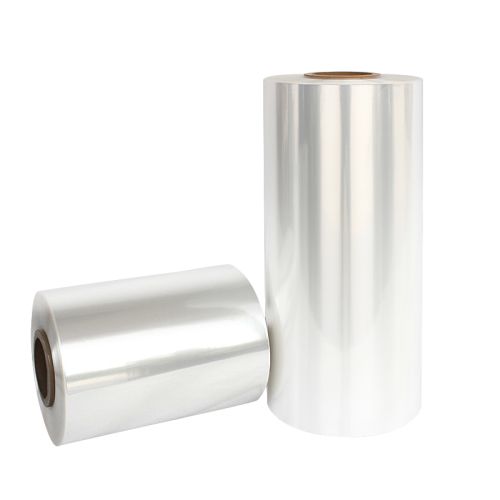
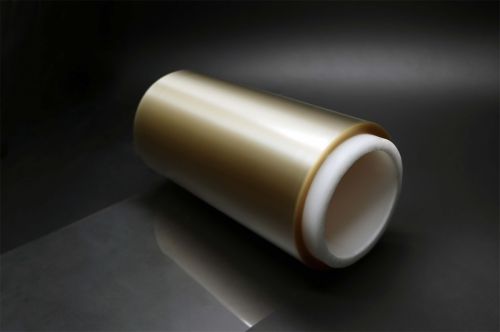
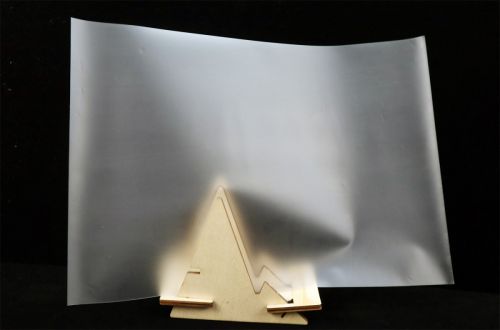
A capacitor producer wants a thinner dielectric for compact elements but sees more wrinkles, breaks, margin instability or electrical rejects. This article explains how Ultra-thin BOPP Capacitor Film can be evaluated for that decision without treating a film label as a finished-package or finished-component guarantee. The focus is the customer problem, the present material or process limitation, and the evidence needed before scale-up.
Treat thickness reduction as a complete metallization and winding process change, not a standalone raw-film purchase. The recommended approach is to connect material selection with conversion settings, aging and end-use verification. That produces a specification a converter, buyer and engineer can all audit.
Why Thinner Film Changes More Than Capacitance
Reducing dielectric gauge can support compact capacitor design, but it also lowers the mechanical margin available during coating, slitting and winding. This point should be reviewed against the actual product, equipment and acceptance criteria. A supplier datasheet can narrow the candidate list, but it does not reproduce printing, lamination, forming, sealing, winding or field exposure in the customer's plant.
Local gauge variation, gels, contamination, scratches, unstable tension and edge damage can become disproportionately important when the web is very thin. The useful question is therefore not whether the base film is generally “high performance.” It is whether the selected grade keeps the required function after every converting step and through the expected service life.
Separate Nominal Thickness From Thickness Uniformity
Ultra-thin BOPP capacitor film is the dielectric base for metallization and winding. Its value depends on uniformity, cleanliness, dielectric behavior and stable roll construction, not thickness alone. This point should be reviewed against the actual product, equipment and acceptance criteria. A supplier datasheet can narrow the candidate list, but it does not reproduce printing, lamination, forming, sealing, winding or field exposure in the customer's plant.
Write the function of every layer or component on the trial specification. Separate optical, barrier, mechanical, electrical, printing, bonding and sealing duties. This prevents one attractive property from hiding a weakness elsewhere in the construction.
Connect Raw Film to Metallization Quality
Set tension and acceleration for the thinner web, control static and particle contamination, verify slitting edges and monitor wrinkle formation through the full roll diameter. This point should be reviewed against the actual product, equipment and acceptance criteria. A supplier datasheet can narrow the candidate list, but it does not reproduce printing, lamination, forming, sealing, winding or field exposure in the customer's plant.
Use a controlled matrix rather than changing several settings at once. Retain samples from incoming film, the first converted stage and the finished part. When a failure appears later, these retained samples make it possible to identify the interface and process step that changed.
Rebuild the Winding Window for Ultra-Thin Webs
Link incoming inspection with metallized roll data, winding records and electrical screening. Track breakdown distribution, insulation resistance, capacitance spread and failure location. This point should be reviewed against the actual product, equipment and acceptance criteria. A supplier datasheet can narrow the candidate list, but it does not reproduce printing, lamination, forming, sealing, winding or field exposure in the customer's plant.
Acceptance should include representative aging or conditioning, not only immediate results. Record test conditions, sample orientation and failure mode. A numeric result without a clear method, conditioning history and failure location is difficult to compare across suppliers.
Use Electrical Screening With Process Evidence
Define nominal gauge and tolerance, roll width, winding quality, defect limits, surface condition, sampling plan, traceability and the converter process used for qualification. This point should be reviewed against the actual product, equipment and acceptance criteria. A supplier datasheet can narrow the candidate list, but it does not reproduce printing, lamination, forming, sealing, winding or field exposure in the customer's plant.
Ask for a trial roll or sample that represents the intended commercial grade. Confirm which values are typical, which are specification limits and which require grade-specific agreement. Final approval should remain tied to the converted structure and end use.
A Supplier Qualification Checklist
Plan the trial with a written baseline, one-variable changes and clear stop criteria. Photograph defects, mark web direction and preserve roll and batch references. This discipline is often more valuable than adding another generic property to the purchase specification.
FAQ: Capacitor Film Gauge
Can this material be approved from a datasheet alone?
No. Datasheet information supports screening, but the converted construction must be tested under representative processing and service conditions.
Should the thinnest or highest-performance grade be selected first?
Not automatically. Select the grade that provides adequate functional margin while remaining stable on the intended equipment and in the final geometry.
What should be compared during a supplier trial?
Compare traceable rolls using the same process settings, then examine both the measured result and the failure location after conditioning.
When should the specification be finalized?
After the material, conversion process and finished component have passed the agreed validation plan. Commercial tolerances should reflect that approved window.
Conclusion
BOPP Capacitor Film Thickness Selection for Winding should lead to a controlled material decision, not a generic claim. Start with the real failure risk, assign each layer or component a function, and verify the result after conversion and conditioning. Review the confirmed Ultra-thin BOPP Capacitor Film page, then compare related options such as Dafu Functional Films and High-Performance Engineering Films. Request grade-specific confirmation before commercial release.