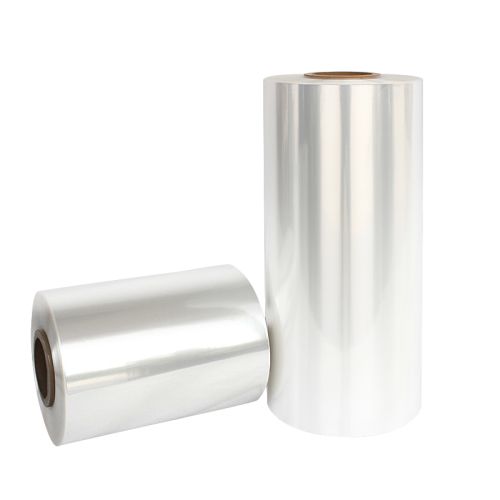
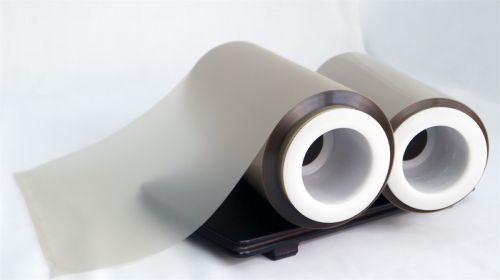
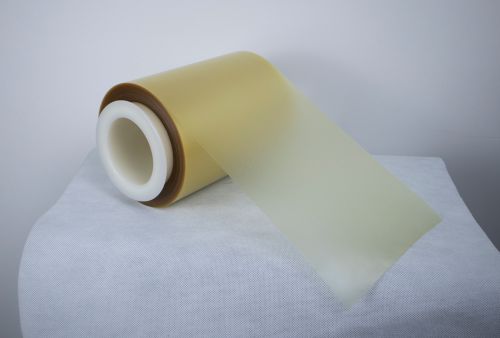
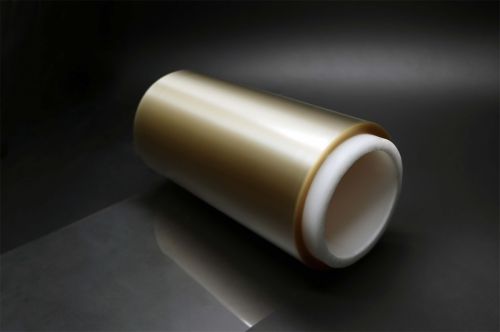
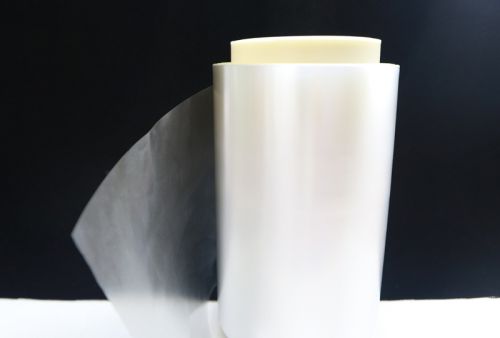
A capacitor film can have strong dielectric data and still create production loss if heat changes its dimensions during metallization, slitting, winding, or element treatment. BOPP Capacitor Film Thermal Shrinkage affects electrode margins, edge alignment, roll profile, winding pressure, and local electrical stress. The value cannot be judged without temperature, time, machine direction, transverse direction, specimen condition, and restraint. Free-film shrinkage is a screening input; the wound capacitor element is the engineering result.
Separate Service Heat from Process Heat
Capacitor film sees different thermal events. Vacuum metallization may heat the moving web for a short period. Slitting and winding add tension and local friction. Element heat treatment can expose a wound structure for longer. Operating temperature then combines electrical loss, ambient conditions, and cooling.
List each event with temperature, duration, tension or restraint, heating rate, and acceptance criterion. A single “heat resistance” value cannot represent all stages.
Read MD and TD Shrinkage Together
BOPP dielectric film is oriented in two directions. Machine-direction and transverse-direction shrinkage may differ, affecting width, length, flatness, and winding geometry. Preserve direction when cutting specimens and record the same reference points before and after conditioning.
The confirmed ultra-thin BOPP capacitor film product page identifies 2–4 μm production and grades for conventional and high-temperature vapor-deposited film, with stated resistance to 105°C. Buyers should request exact grade data and not transfer one thickness result to another.
Metallization Changes the Thermal and Mechanical System
The base film enters metallization under controlled tension and vacuum. Deposition conditions, web speed, cooling, roll hardness, and margin pattern can influence dimensional response. Metallization web stability should be recorded across startup, steady production, and roll changes.
Measure width, edge position, wrinkles, bagginess, resistance pattern, and roll profile. Trace the metallized roll back to the base-film lane and parent roll. If a defect appears only after deposition, compare base-film shrinkage with the metallizer’s temperature and tension history.
Winding Can Hide or Redistribute Movement
A wound element restrains the film differently from a free strip. Thermal movement may change internal pressure, margin alignment, wrinkles, or connection geometry rather than appearing as simple length loss. Capacitor winding dimensional control therefore requires representative element tests.
Use the actual film thickness, slit width, metallization pattern, winding tension, element size, and heat-treatment cycle. Inspect capacitance, insulation resistance, dielectric withstand, partial discharge or other project-specific electrical results after conditioning.
Write the Purchase Specification Around Variation
Request nominal thickness and tolerance, thickness profile, flatness, roughness, shrinkage MD/TD with method, tensile balance, roll build, edge quality, splice rules, storage, and lot traceability. Define which figures are typical and which are acceptance limits.
Pilot approval should cover more than a short roll. Compare within-roll and roll-to-roll variation through metallization and winding. If changing from a thicker grade to ultra-thin capacitor film, separate the effects of gauge, grade, line tension, and electrode design.
Account for Sample Preparation and Measurement Uncertainty
Ultra-thin film is easy to stretch, wrinkle, or heat with handling. Define specimen size, cutting tool, conditioning, marking method, oven airflow, support, cooling, and measurement resolution. Operators should avoid adding tension while placing or measuring the specimen.
Run replicate samples from several cross-web positions and report both individual values and average. A small numerical difference is not meaningful if it is within the method’s repeatability. Supplier and customer should align their procedures before using shrinkage as an acceptance criterion.
Connect Shrinkage with Roughness and Flatness
Thermal movement is only one source of metallization or winding instability. Surface roughness influences air release and layer contact, while transverse flatness affects wrinkles and tracking. A film with acceptable free shrinkage can still run poorly if the profile or surface is unsuitable.
Review shrinkage together with thickness profile, roughness, flatness, tensile balance, edge quality, and roll hardness. Correlate each incoming measurement with metallizer and winding yield rather than ranking properties separately.
Investigate Drift Before Changing the Grade
When margin position or roll profile drifts, compare recent good and bad lots using the same metallization and winding settings. Check whether the change follows film lane, roll age, storage, machine temperature, tension, or operator shift.
Do not change grade, tension, and heat treatment at once. A controlled comparison preserves evidence and reduces the risk of moving the defect elsewhere in the capacitor element.
Set Escalation Rules for Out-of-Pattern Results
A control plan should define what happens when one shrinkage result, one lane, or one wound element moves outside the normal pattern. Repeat testing on retained specimens, verify the oven and measurement system, then compare nearby roll positions before rejecting a lot. If the result is confirmed, quarantine linked metallized and slit rolls until the effect on winding and electrical performance is understood. Clear escalation rules prevent both unnecessary rejection and uncontrolled use of questionable film.
Capacitor film heat resistance should therefore be documented as a defined temperature-time response, not a general label applied to every thickness or product code.
FAQ
Can shrinkage data from 3.8 μm film be used for 2 μm film?
Not automatically. Thickness, grade, orientation, and test condition can change the result. Request data for the exact product code.
Why test both MD and TD shrinkage?
The directions can respond differently, affecting length, width, flatness, electrode margins, and winding geometry.
Is free-film shrinkage enough for capacitor approval?
No. It is useful for screening, but restrained metallized film and finished wound elements should also be evaluated.
What process record helps investigate shrinkage defects?
Keep base-film lot and lane, metallization temperature and tension, slitting history, winding settings, and heat-treatment records linked to the element.
BOPP Capacitor Film Thermal Shrinkage: Approval Focus
BOPP Capacitor Film Thermal Shrinkage should connect material data with metallization and winding history. Specify the exact test condition, preserve MD and TD identity, and validate dimensional and electrical behavior in the representative capacitor element.