PEI Film for Green Hydrogen Insulation Systems
Green hydrogen equipment combines electrical power, heat, moisture, pressure, chemicals, and long operating periods. An insulation film used near a stack, power-control assembly, sensor, motor, or heated process area must do more than resist voltage in a room-temperature test. It must retain dimensions, mechanical integrity, and electrical behavior after the complete component is converted and exposed to its real environment.
This makes PEI film for green hydrogen insulation a relevant material direction to evaluate, but not an automatic approval. Dafu identifies green hydrogen production as an application for its PEI film. The published product data also provides thermal, electrical, mechanical, optical, and dimensional reference values. Engineers should use those values to define a qualification plan rather than treating them as guaranteed performance for every thickness or assembly.
Why Hydrogen Equipment Creates a Multi-Stress Insulation Problem
Hydrogen production systems can contain electrolyzer stacks, rectifiers, busbars, control electronics, pumps, valves, sensors, heaters, and cooling circuits. The exact insulation demand depends on where the film is placed. A barrier near a power module faces different risks from a sensor diaphragm, motor-slot liner, cable wrap, or membrane switch.
The first task is therefore to define the component boundary:
- Normal and peak voltage
- Continuous and short-term temperature
- Humidity, condensation, and water exposure
- Contact with acids, alkalis, cleaners, coolants, or process chemicals
- Mechanical pressure, vibration, flexing, and creep
- Required thickness, clearance, and creepage distance
- Converting steps such as printing, die cutting, forming, bonding, or metallization
- Inspection and traceability requirements
The term “hydrogen equipment insulation” is too broad to select a grade by itself. The material must be connected to one defined part and one defined risk profile.
PEI Film for Green Hydrogen Insulation: Thermal Data
Dafu's PEI product sheet reports a glass-transition temperature of 217°C under ISO 11357 and a relative temperature index of 170°C under UL 746B. It also reports thermal shrinkage after 30 minutes at 200°C of 0.2% in the machine direction and 0.1% in the transverse direction for the tested 100 μm sample.
These figures make high temperature PEI film relevant to equipment where common lower-temperature films may lose stiffness or dimensional control. However, 217°C is not a recommended continuous-use temperature. Glass transition, relative temperature index, short process exposure, and long-term service temperature describe different material behaviors.
Dafu's published guide to PEI film for 170°C insulation reinforces the need to qualify the actual insulation construction around the stated thermal boundary. The final limit may come from an adhesive, printed layer, coating, connector, nearby polymer, or mechanical joint rather than the PEI base film.
For a hydrogen-system component, the thermal plan should distinguish:
- Normal operating temperature at the film location.
- Local hot spots during full electrical load.
- Start-up, shutdown, fault, and maintenance conditions.
- Process heat from lamination, printing, forming, or curing.
- Thermal cycling between idle and operating states.
Testing only a maximum-temperature soak can miss stress created by repeated expansion and contraction.
Dimensional Stability Affects More Than Appearance
Low thermal movement can matter when an insulation film has holes, slots, printed circuits, conductive clearances, or precisely aligned adhesive areas. If a converted film moves after heat exposure, it can uncover an edge, shift a sensor interface, change a gap, or place stress on a bond.
The reported shrinkage values provide a useful starting point for process trials. They should not be assumed across every thickness because Dafu states that the table represents laboratory values for a 100 μm PEI sample and is non-guaranteed. Buyers should confirm thickness-specific tolerances and thermal behavior for the grade being quoted.
A practical dimensional study should measure the film:
- Before conversion
- After printing or surface treatment
- After adhesive lamination or thermal curing
- After die cutting or forming
- After environmental conditioning
- In the assembled fixture under realistic constraint
This sequence shows whether dimensional change originates in the base film or in the conversion process.
PEI Electrical Insulation Data for Early Screening
Dafu's PEI technical table reports surface resistivity of 10^15 ohms and volume resistivity of 10^15 under IEC 60093. It lists a dielectric constant of 3 at 1 MHz and a loss tangent of 0.006 under IEC 60250.
These values help engineers screen PEI electrical insulation for control, sensing, motor, or power-related parts. They do not define the working voltage of a finished component. Electrical performance depends on film thickness, electrode shape, frequency, temperature, humidity, contamination, edge condition, and the complete creepage and clearance design.
The qualification plan should specify the required test method and acceptance limit for the finished part. It may include dielectric withstand, insulation resistance, partial-discharge behavior, tracking or contamination evaluation, and performance after thermal-humidity aging. The correct set depends on the equipment design and applicable customer requirements.
Moisture and Chemical Exposure Need Separate Tests
Green hydrogen production can involve water, water vapor, electrolytes, cleaning fluids, and changing humidity. Dafu's PEI table reports water absorption of 0.25% after 24 hours at 23°C under ISO 62. The product description also identifies weather, radiation, and chemical resistance, especially acid resistance, as material features.
Those statements support material screening but do not prove compatibility with a specific electrolyte or cleaning process. Concentration, temperature, exposure time, stress, and surface condition can change the result. The film may also be laminated with an adhesive that has a different chemical response.
Testing should therefore use the actual chemical, concentration, temperature, duration, and mechanical constraint. After exposure, inspect mass, dimensions, appearance, tensile behavior, bond condition, and electrical performance. A sample that looks unchanged may still have altered insulation or adhesion.
Mechanical Properties Influence Converting and Assembly
The Dafu laboratory table reports PEI tensile strength of 105 MPa in the machine direction and 102 MPa in the transverse direction. Elongation at break is listed as 65% MD and 34% TD, while tensile modulus is 2,796 MPa MD and 2,808 MPa TD.
These values indicate a balance of strength and stiffness that can support die-cut insulation, film switches, diaphragms, and other converted parts. The practical question is whether the chosen thickness can pass through the intended process without cracking, curling, stretching, or damaging critical edges.
For die cutting, buyers should review burrs, dust, hole position, corner radius, and liner removal. For wrapping or bending, they should check minimum bend radius and stress whitening. For adhesive lamination, they should measure peel after heat, humidity, and chemical exposure. For vibration, the complete mounted part should be inspected for fretting or edge wear.
Thickness, Width, Color, and Surface Options
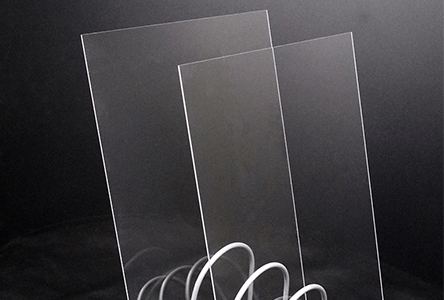
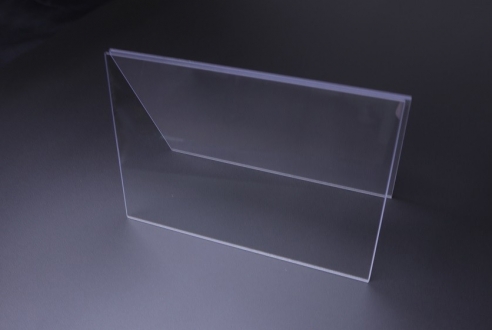
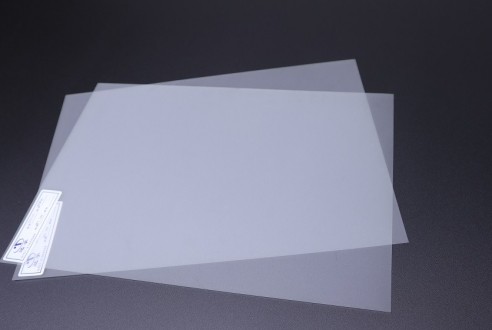
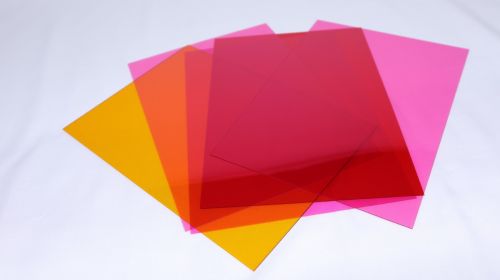
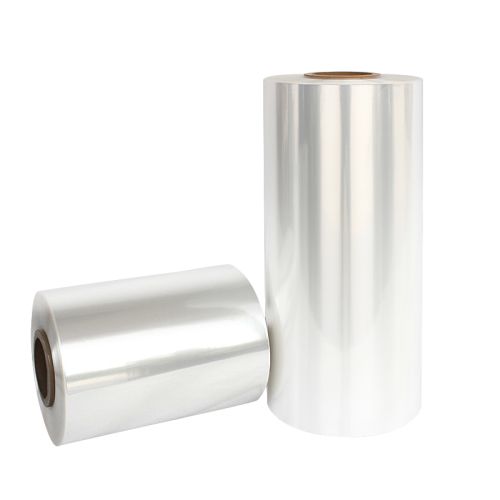
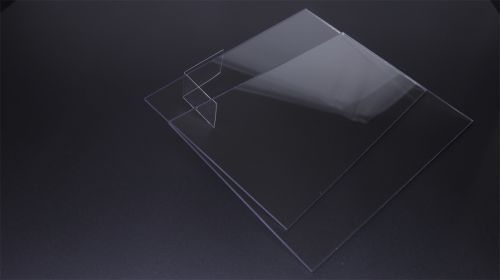
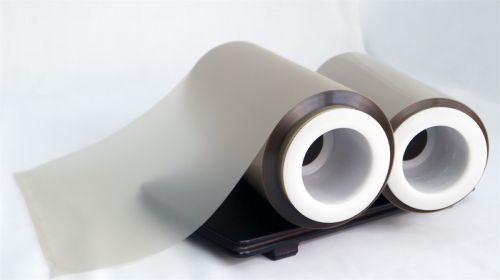
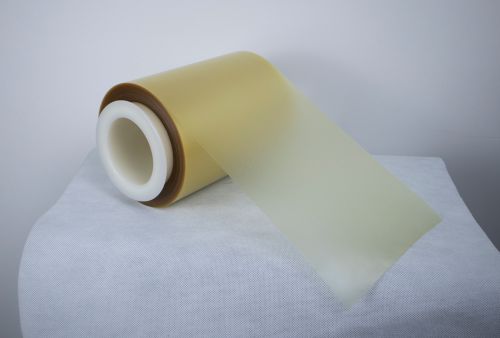
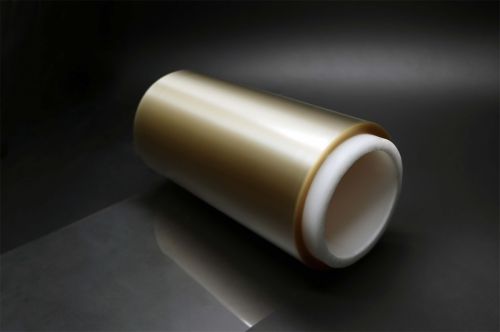
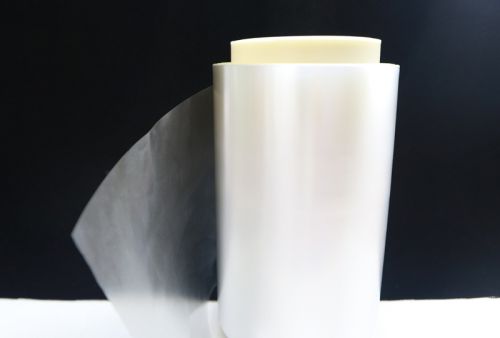
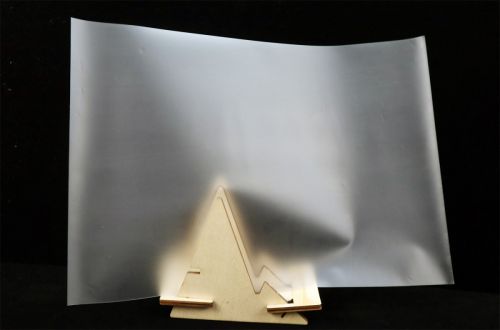
Dafu lists PEI film code DFPEI in natural and black colors. Available surface combinations include polished/matte and matte/matte. The listed thickness range is 0.025-0.5 mm, with width up to 1,060 mm.
These choices affect more than purchasing convenience:
- Thickness affects stiffness, insulation distance, weight, and converting behavior.
- Surface texture can influence printing, bonding, friction, and appearance.
- Natural film supports visual inspection and infrared-related applications.
- Black film may support opacity, identification, or equipment design requirements.
- Width affects layout efficiency, slitting strategy, and material yield.
A quotation should state the exact thickness, tolerance, width, surface combination, color, roll or sheet format, core, roll length, joint policy, packaging, and inspection requirements. Ordering only “PEI film” leaves too many variables open.
How PEI Compares with PEEK in Material Selection
PEI and PEEK can both serve demanding electrical and thermal applications, but they should not be treated as interchangeable. PEI is an amorphous engineering polymer with the 217°C glass-transition and 170°C relative-temperature-index values reported in Dafu's data. PEEK is semi-crystalline and is considered for higher thermal boundaries and different chemical or wear demands.
Cost, processing, stiffness, thickness availability, chemical environment, and required temperature should guide the comparison. If the project does not need PEEK's higher thermal capability, PEI may provide a practical balance. If the component exceeds PEI's verified boundary or faces a harsher environment, PEEK or another material may deserve evaluation.
Dafu's overview of PEEK, PEI, and ultra-thin capacitor films helps buyers separate these product families before requesting samples. The final decision still needs grade-specific and component-level tests.
A Qualification Sequence for Hydrogen Equipment
A disciplined program can reduce the risk of approving a film too early:
1. Define the component and failure modes
Identify electrical breakdown, dimensional movement, chemical attack, loss of adhesion, cracking, creep, particle generation, and edge wear as applicable.
2. Select a PEI construction
Choose thickness, width, surface, color, adhesive, printing, coating, and conversion method. Record which data are typical and which are guaranteed.
3. Run production-intent conversion
Use the intended printing, curing, laminating, slitting, forming, and die-cut conditions. Laboratory hand samples may not reproduce web tension or production heat.
4. Condition the finished part
Apply temperature, thermal cycling, humidity, water, chemicals, vibration, and mechanical load that reflect the real component.
5. Repeat critical measurements
Check dimensions, appearance, dielectric behavior, resistance, adhesion, and mechanical integrity after conditioning.
6. Establish the supply specification
Agree on measurable incoming limits, sampling, packaging, storage, traceability, and change control before serial production.
FAQ
Is PEI film suitable for green hydrogen equipment?
PEI film can be evaluated for insulation and functional film components in hydrogen equipment because it combines heat resistance, dimensional stability, electrical properties, and chemical resistance. Suitability depends on the exact location, chemical exposure, voltage, temperature, and completed construction.
What continuous temperature can Dafu PEI film support?
Dafu reports a relative temperature index of 170°C for the tested PEI film. This is different from its reported 217°C glass-transition temperature. Confirm the grade specification and validate the finished component at its real operating conditions.
What thickness range is available?
Dafu lists PEI film from 0.025 to 0.5 mm, with width up to 1,060 mm. Buyers should confirm tolerance, surface, color, and format for the selected thickness.
Can PEI film contact electrolyte or cleaning chemicals?
The material is described as chemically resistant, especially to acids, but compatibility must be tested with the actual chemical, concentration, temperature, duration, and mechanical stress. Adhesives and printed layers require separate evaluation.
Should PEI film be selected by dielectric constant alone?
No. Dielectric constant is only one screening value. The design must also consider insulation resistance, voltage stress, frequency, humidity, contamination, dimensions, thickness, edges, and the complete assembly.
If you are evaluating PEI film for green hydrogen insulation, provide the component location, voltage, operating temperature, chemical exposure, thickness, and converting route. Dafu Film can then discuss an appropriate PEI sample and the information needed for qualification.