PEEK Film for EV Battery Insulation Design
EV battery insulation is not only an electrical specification. The material also has to remain dimensionally stable around heat, resist moisture and common processing chemicals, and fit into a compact battery assembly. A film that performs well in a room-temperature datasheet comparison may behave differently after converting, adhesive lamination, thermal cycling, or long-term exposure inside a vehicle.
This is why engineers evaluating PEEK film for EV batteries usually need to look beyond a single dielectric strength value. Polymer morphology, thickness, surface texture, moisture absorption, thermal behavior, mechanical properties, and the complete insulation structure all affect whether the film is suitable for the intended component.
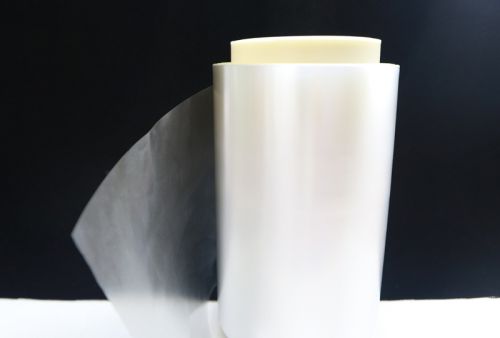
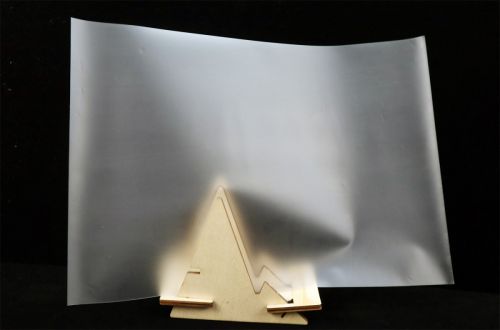
PEEK film provides an option for insulation layers used in demanding electric-vehicle environments. Dafu supplies semi-crystalline and amorphous PEEK film grades, with different surface finishes and thickness ranges. The selection should start with the operating conditions of the battery component, not with a general claim that one grade is suitable for every location.
Why EV Battery Insulation Materials Face Multiple Stresses
Battery modules and packs contain cells, busbars, interconnects, sensors, cooling components, structural parts, and electronic control systems. Insulation may be required between conductive parts, around cables, beneath pressure-sensitive tapes, or as a layer in a converted component. Space is limited, but reducing insulation thickness without validating the final structure can increase electrical and mechanical risk.
The main design questions often include:
- What continuous and peak temperatures will the insulation experience?
- What voltage and clearance requirements apply to the finished component?
- Will the film be exposed to humidity, coolants, cleaning agents, or adhesive chemistry?
- Does the film need to be formed, wrapped, die-cut, laminated, or printed?
- Will flexing, vibration, edge contact, or assembly pressure create mechanical stress?
- How much dimensional change is acceptable during converting and service?
These questions are connected. A thicker film may improve handling but occupy more space. A highly crystalline grade may offer useful thermal behavior but require a different converting process. A flexible low-crystallinity film may be easier to wrap, yet the final construction still needs electrical and thermal validation.
PEEK Electrical Insulation Data Relevant to Battery Design
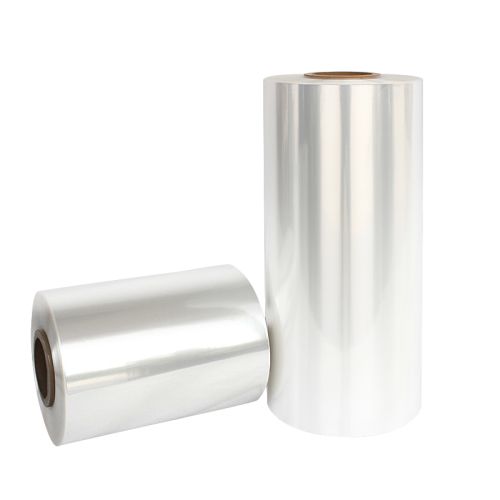
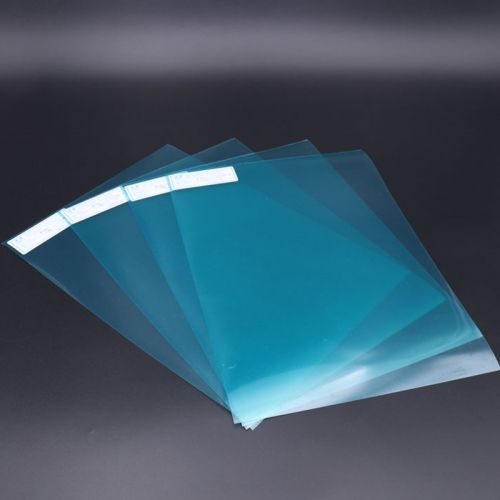
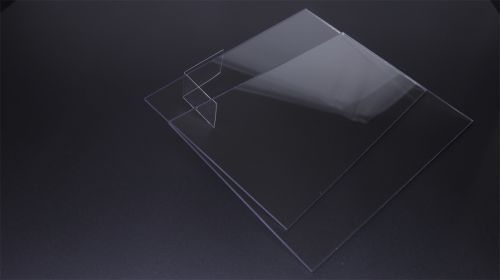
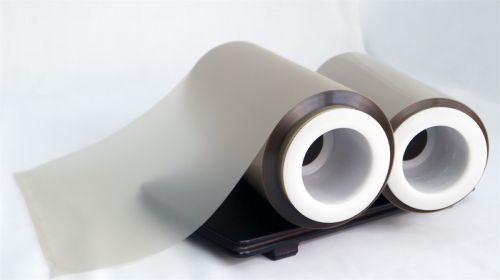
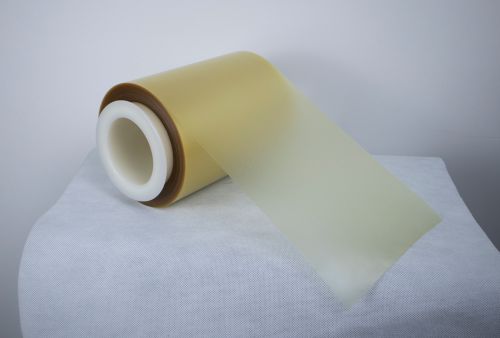
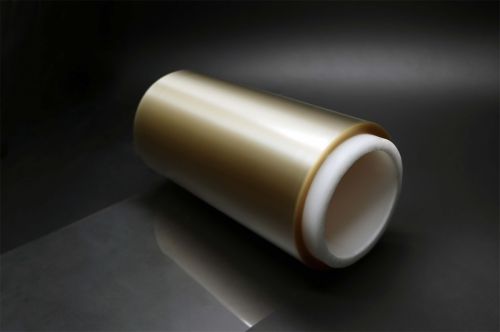
Dafu's product data identifies both low-crystallinity and high-crystallinity PEEK film. The available film thickness range is 0.006-0.50 mm, depending on the product form and width. Films from 0.006 to 0.10 mm are listed at widths up to 950 mm, while the 0.10-0.50 mm range is listed at widths up to 1,060 mm. Surface options include polished/polished, polished/matte, and matte/matte.
The published technical table reports typical laboratory values for 100 μm high- and low-crystallinity PEEK samples. These figures are non-guaranteed reference values, so buyers should confirm the exact grade, thickness, test condition, and acceptance criteria for their project.
For the high-crystallinity DFPK-G grade, the table reports:
- Dielectric strength: 80 kV/mm, tested to IEC 60243-1
- Surface resistivity: 10^15 ohms, tested to IEC 60093
- Volume resistivity: 10^16 ohm-m, tested to IEC 60093
- Dielectric constant: 3.2 at 1 MHz
- Loss tangent: 0.003 at 1 MHz
- Moisture absorption: 0.1% under the stated 23°C/50% RH equilibrium condition
- Melting point: 341°C
- Relative temperature index: 260°C, tested to UL 746B
The same table reports a melting point of 341°C and 0.1% moisture absorption for the low-crystallinity DFPK-L grade. Its dielectric constant is listed as 3.1 at 1 MHz and loss tangent as 0.004 at 1 MHz. These numbers help engineers compare candidate grades, but they do not replace validation of a finished battery insulation structure.
How Low Moisture Absorption Supports Insulation Stability
Moisture can affect dimensional behavior, surface condition, adhesion, and electrical performance. In an EV battery system, the insulation material may experience changing temperature and humidity during manufacturing, transport, and vehicle service. A low moisture-absorption polymer can reduce one source of variation, especially where the insulation is combined with adhesives or other hygroscopic materials.
The reported 0.1% moisture absorption for Dafu PEEK film is relevant here. However, the complete construction still matters. Adhesives, coatings, release liners, gaps, edge exposure, and contaminants may behave differently from the base film. Qualification should therefore include the converted part and not only a dry, unlaminated film sample.
High Temperature PEEK Film and Dimensional Control
Temperature resistance is often the first reason engineers consider high temperature PEEK film, but a melting point alone does not define service capability. The important questions are how the selected grade changes under the actual temperature profile and whether the component maintains its dimensions, adhesion, dielectric performance, and mechanical integrity.
Dafu's technical data distinguishes between crystallinity levels. For the high-crystallinity grade, thermal shrinkage is reported as 0.8% in the machine direction and 0.3% in the transverse direction at 250°C for 30 minutes. For the low-crystallinity grade, shrinkage is reported as 3.5% MD and 3.3% TD at 200°C for 30 minutes. These values are useful for early material screening, but engineers should confirm whether the test condition represents their process and whether annealing, forming, lamination, or adhesive curing changes the result.
This is particularly important for die-cut insulation parts. Dimensional movement can affect hole alignment, edge coverage, and creepage paths. A film may have strong thermal resistance as a polymer but still require process controls to meet tight converted-part tolerances.
Choosing Between Low- and High-Crystallinity PEEK Film
The right crystallinity level depends on the component and converting method. Dafu's overview of high-performance PEEK film explains why crystallinity and processing route should be considered together rather than treating all PEEK films as one grade.
Low-crystallinity PEEK film can be considered where flexibility and processability are important, such as wrapping, lamination, or parts that need to conform to a surface. The DFPK-L product data lists natural or black color options and several surface textures. Its reported tensile strength at yield is 68 MPa in the machine direction and 66 MPa in the transverse direction for the tested sample.
High-crystallinity PEEK film can be evaluated where higher thermal dimensional stability and mechanical stiffness are important. The reported tensile strength at yield for DFPK-G is 93 MPa MD and 92 MPa TD, while the tensile modulus is listed as 2,846 MPa MD and 2,912 MPa TD.
These values should not be interpreted as a universal ranking. A stiffer film is not automatically easier to convert, and a more flexible film is not automatically better for every wrapped component. The material has to match the part geometry, handling equipment, adhesive system, and service environment.
Converting Questions to Confirm Before Grade Selection
Film procurement should include discussions with both the material supplier and the converter. Important points include:
Thickness and tolerance
The nominal thickness must support the electrical design, but tolerance and uniformity also affect winding, lamination, die cutting, and final part consistency. Buyers should request the specification for the selected grade rather than applying one generic tolerance across the full 0.006-0.50 mm range.
Surface finish and adhesion
Polished and matte surfaces can interact differently with adhesives, coatings, and printing. Peel strength should be tested with the actual adhesive, surface preparation, curing condition, and aging protocol. Base-film performance alone cannot confirm the adhesion of a laminate.
Edge quality and cleanliness
Slitting and die-cut edges may become important in high-voltage insulation. Burrs, particles, folds, and sharp contact points can create local stress. The converted part should be inspected using acceptance criteria related to the final assembly.
Thermal history
Heating during lamination, forming, adhesive curing, or later assembly can change dimensions and crystallinity. Prototype parts should follow the intended production process before electrical and mechanical testing.
Color and inspection requirements
Natural and black grades may support different optical inspection or design requirements. Color selection should consider inspection systems, marking, and heat absorption as well as appearance.
Building a Qualification Plan for EV Battery Insulation Film
A practical qualification plan can move from material screening to converted-part testing. Buyers comparing several heat-resistant films can also use Dafu's overview of PEEK, PEI and ultra-thin capacitor films to identify which product family deserves detailed component trials:
- Define the voltage, temperature, humidity, chemical exposure, and mechanical loads.
- Select the PEEK grade, thickness, width, color, and surface finish.
- Confirm supplier test methods and whether values are typical or guaranteed.
- Convert prototypes using the intended production process.
- Test dielectric performance, dimensions, adhesion, and mechanical integrity after environmental conditioning.
- Inspect critical edges, holes, folds, and interfaces in the assembled component.
- Establish incoming inspection and change-control requirements before serial production.
This approach helps prevent a common procurement problem: selecting a polymer based on an attractive headline temperature, then discovering that the converted insulation layer does not meet dimensional or adhesion requirements.
When PEEK Film May Be a Suitable Option
PEEK film is worth evaluating when a battery insulation component needs a combination of electrical insulation, low moisture absorption, chemical resistance, mechanical strength, and high-temperature capability. Dafu also lists electric-vehicle battery insulation layers among the applications for its PEEK film.
It may not be the most economical choice for every insulation layer. Lower-temperature areas may be served by other polymers, depending on voltage, processing, thickness, and service requirements. The value of PEEK appears when the complete operating environment justifies its performance profile.
For buyers, the most useful supplier discussion is therefore not simply, "Do you sell PEEK film?" It is, "Which PEEK grade, thickness, surface, and crystallinity level should we test for this battery insulation structure?"
FAQ
Is PEEK film suitable for EV battery insulation?
PEEK film can be evaluated for EV battery insulation layers that require electrical insulation, heat resistance, low moisture absorption, and chemical resistance. Suitability must be confirmed in the converted component under the project's voltage, temperature, humidity, and mechanical conditions.
What thicknesses are available for Dafu PEEK film?
Dafu lists PEEK film from 0.006 to 0.50 mm. Width depends on thickness: up to 950 mm for 0.006-0.10 mm film and up to 1,060 mm for 0.10-0.50 mm film.
What is the dielectric strength of Dafu PEEK film?
The technical table reports 80 kV/mm for a 100 μm high-crystallinity DFPK-G laboratory sample tested to IEC 60243-1. It is a non-guaranteed reference value; confirm the specification for the selected grade and thickness.
Should I choose low- or high-crystallinity PEEK film?
Low-crystallinity film may help where flexibility and processability are priorities. High-crystallinity film may be considered where thermal dimensional stability and stiffness are more important. The final choice should be verified through converting and component testing.
Can PEEK film be laminated with pressure-sensitive adhesive?
PEEK film is listed for pressure-sensitive tape substrates, but adhesion depends on surface finish, treatment, adhesive chemistry, curing, and aging conditions. Test the complete laminate rather than assuming a universal peel value.
If you are evaluating PEEK film for EV batteries, Dafu Film can discuss the required thickness, crystallinity level, surface finish, width, and sample conditions before qualification. Sharing the component geometry and operating profile will make grade selection more useful than requesting a general PEEK datasheet.