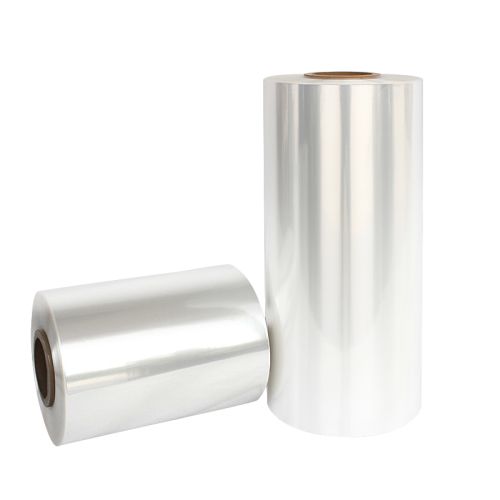
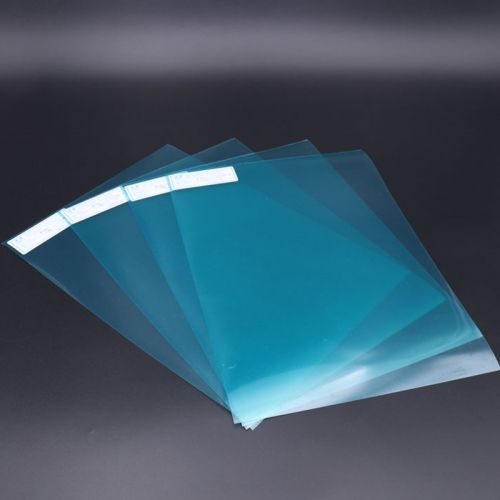
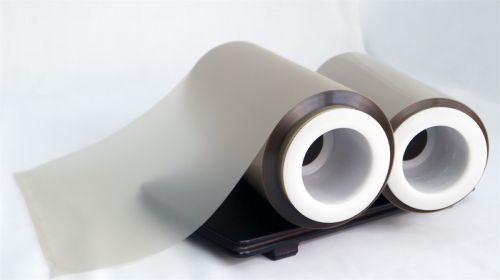
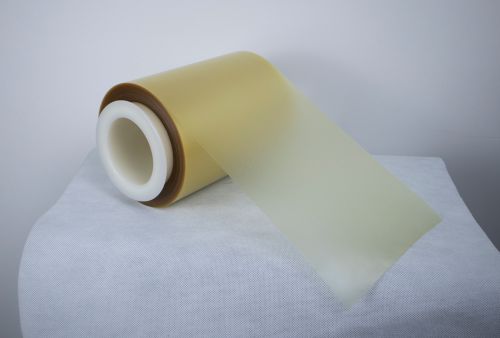
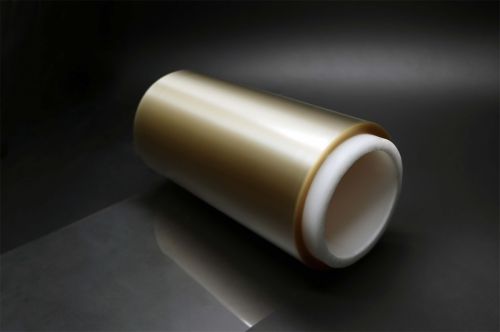
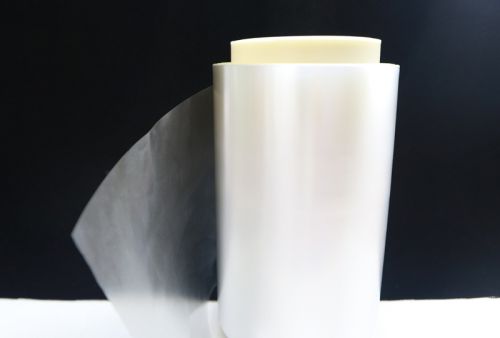
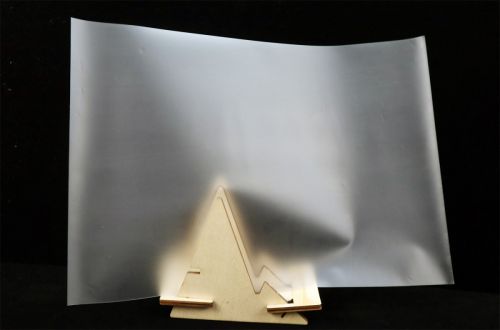
2μm BOPP Capacitor Film reduces dielectric thickness to two microns. This geometry can place more active area inside a constrained winding volume.
Dafu 2μm BOPP Capacitor Film provides high dielectric strength and low dielectric loss. It also offers strong thickness uniformity and transverse flatness.
Verified mechanical properties include high tensile strength and good isotropy. The film also has low thermal shrinkage and 105°C temperature resistance.
These properties support compact capacitor development. They do not establish voltage, frequency, capacitance, lifetime, or safety for every capacitor design.
An ultra thin capacitor film experiences strong dependence on local quality. A particle, scratch, wrinkle, or thin zone can become critical.
The buyer should ask a design question before discussing price. How much electrical, thermal, and manufacturing margin does the finished capacitor retain?
Connect Two-Micron Geometry with Electrical Stress
Dielectric thickness influences capacitance and electrical field. A thinner polypropylene dielectric film can increase active area within a given package.
That benefit does not remove design tradeoffs. The capacitor engineer must connect film thickness with voltage, electrode pattern, winding, and cooling.
No universal voltage rating is verified for this 2 micron dielectric film. The finished element must prove the intended operating condition.
High Dielectric Strength Film Needs Distribution Data
High dielectric strength film resists breakdown under a defined test. Dafu’s verified product information describes high dielectric strength at two microns.
An average result cannot show every local weakness. Buyers should review distributions, sample areas, electrode geometry, voltage ramp, and conditioning.
Test methods should remain consistent when comparing batches or suppliers. Results from different methods may not support a direct ranking.
Incoming testing should use agreed conditions. The plan should also define how outliers, failed specimens, and retests are handled.
Low Dielectric Loss Film Must Enter a Thermal Model
Low dielectric loss can help limit internal heating during repeated electrical cycling. Dafu 2μm BOPP Capacitor Film offers this relevant property.
The complete capacitor still creates heat through several mechanisms. Connections, electrodes, ripple current, frequency, enclosure, and cooling all matter.
The design team should measure temperature rise in the finished capacitor. Raw-film loss data cannot replace that system test.
Thickness Uniformity Protects Capacitance and Local Margin
A nominal two-micron value describes a target, not every point across a roll. Local variation can influence electrical field and winding geometry.
Dafu 2μm BOPP Capacitor Film offers excellent thickness uniformity. Buyers should confirm the supplier’s measurement method and sampling plan.
Profile information should cover width and roll length. Repeating bands or edge variation may not appear in one average measurement.
Turn Thickness Data into Process Limits
The capacitor producer should compare incoming profiles with metallization and winding outcomes. This link identifies variation that affects production.
Control charts may help reveal gradual shifts between rolls. Exact control limits must come from verified process capability and project requirements.
No tolerance is invented in this guide. Buyers should agree grade-specific limits after reviewing data and running representative trials.
The specification should also define the measurement instrument and conditioning. A number without a method can create false disputes.
Transverse Flatness Supports an Ultra-Thin Web
Transverse flatness helps a thin web contact rollers and track through conversion. Dafu’s film provides excellent transverse flatness.
Flatness still can change through storage, transport, unwinding, tension, heat, and rewinding. Full-roll behavior deserves production testing.
Baggy lanes, edge waves, wrinkles, or curl can disturb metallization and winding. They may also increase scrap before electrical testing begins.
Define the Web-Handling Window
Converters should establish tension, speed, acceleration, roller contact, edge guiding, and static-control settings. The window should include normal transitions.
Excessive tension can stretch or damage an ultra thin capacitor film. Insufficient tension can cause wrinkles, wandering, or loose winding.
Rollers should remain aligned, smooth, and clean. Small particles or surface damage can mark a two-micron web.
Trial records should separate defects introduced by the incoming roll from those introduced by equipment. This distinction protects both parties.
Metallization Is the First System-Level Test
Capacitor grade BOPP film normally receives a conductive metallized pattern before winding. That process adds vacuum, heat, tension, and coating requirements.
This capacitor grade BOPP film trial should evaluate tracking, thermal response, metallization uniformity, margin accuracy, edges, and rewinding condition.
Metal adhesion and sheet resistance may matter to the capacitor design. No product-specific values are verified in the available information.
Those limits should come from the electrode design and confirmed converter data. They should not be copied from an unrelated capacitor.
Inspect the Metallized Roll Again
Metallization can reveal or create defects that raw-film inspection missed. The converted roll should receive a new appearance and profile review.
Teams should inspect wrinkles, scratches, bare areas, pattern position, edges, telescoping, and roll hardness. Electrical checks should follow agreed methods.
The rewound roll must support later slitting without added edge damage. Slit width and edge quality influence winding alignment.
Winding Converts Material Variation into Element Geometry
Winding stacks thousands of thin layers under controlled tension. Small web errors can accumulate into a visible or electrical element defect.
High tensile strength helps the film tolerate processing. Good isotropy supports balanced behavior across the web.
Those properties do not justify aggressive settings. The winding plan should begin conservatively and expand only after stable evidence.
Control Tension through the Entire Roll
Winding tension may need adjustment as element diameter changes. Acceleration, deceleration, starts, and stops can disturb the established balance.
Operators should monitor alignment, wrinkles, edge condition, winding pressure, and element dimensions. They should also record reject causes.
Static can attract dust and complicate web control. Grounding, clean work areas, and suitable static management are important process controls.
The trial should include representative roll length. Short laboratory winding cannot show every profile or transition problem.
Use the 105°C Information with Proper Boundaries
Dafu 2μm BOPP Capacitor Film offers temperature resistance up to 105°C. It also provides low thermal shrinkage.
This verified temperature point supports material screening. It does not define continuous capacitor service under every electrical and mechanical load.
Time, tension, winding pressure, metallization, and thermal cycling can affect dimensional response. The finished element needs relevant heat testing.
Compare Free Film and Wound Behavior
Free-film shrinkage and wound-element change may differ. Winding pressure constrains the layers and can create internal stress.
Heat treatment should follow the intended production route. Dimensions, capacitance, winding condition, and visible defects should be recorded before and after.
Thermal qualification should also include electrical loading where relevant. Internal heating may create a different condition from external oven exposure.
No universal duration or temperature cycle is stated here. The capacitor application must define those conditions.
Cleanliness Becomes an Electrical Design Input
At two microns, foreign particles can create local pressure and field concentration. Scratches, gels, pinholes, and embedded contamination deserve strict control.
The supply chain should protect the polypropylene dielectric film from unnecessary contact. Packaging, storage, unpacking, and processing all matter.
Incoming inspection should record surface marks, edge damage, wrinkles, contamination, roll formation, and identification. Defect classes need agreed definitions.
Link Defect Maps with Electrical Failures
A useful defect map connects film location with metallized-roll and capacitor results. This evidence can reveal repeating or lane-related problems.
Failure analysis should preserve the element, roll identity, position, and process settings. Without traceability, the same defect may recur unnoticed.
No zero-defect promise is verified. Acceptance limits should reflect application risk, practical inspection capability, and finished-capacitor results.
Qualify 2 Micron Dielectric Film by Representative Lots
A qualification program should progress from material review to finished-capacitor evidence. Each stage should have written acceptance criteria.
The first stage confirms thickness profile, flatness, tensile behavior, dielectric data, thermal information, roll condition, and traceability.
The second stage covers metallization, slitting, and rewinding. The third stage establishes stable winding settings and element dimensions.
The final stage tests capacitance, insulation, breakdown behavior, temperature rise, and relevant aging. Exact tests depend on the capacitor design.
Critical trials should use more than one representative lot. One favorable roll cannot establish normal batch consistency.
Select a BOPP Capacitor Film Supplier on Usable Evidence
A BOPP capacitor film supplier should explain how two-micron thickness and uniformity are measured. Test conditions should accompany electrical data.
Buyers should ask about roll identification, defect classification, recommended handling, storage, available dimensions, and representative trial material.
The buyer should share metallization equipment, winding process, electrode design, voltage, frequency, temperature, and end use. Context improves grade selection.
Price comparisons should include usable area, metallization yield, winding yield, electrical rejects, element size, and testing cost.
The lowest roll price may not deliver the lowest cost per approved capacitor. Process stability determines the commercial value of thinness.
Approve the Remaining Margin
At two microns, Dafu film retains high dielectric strength and low dielectric loss. It also provides verified process-supporting properties.
Thickness uniformity, transverse flatness, tensile strength, isotropy, low thermal shrinkage, and 105°C resistance form a strong material foundation.
The qualification must show how much margin remains after metallization, winding, heat, electrical loading, and aging. That margin belongs to the system.
When representative production and capacitor tests pass agreed limits, 2μm BOPP Capacitor Film can support compact designs with controlled risk.