
Release time:2026.06.29
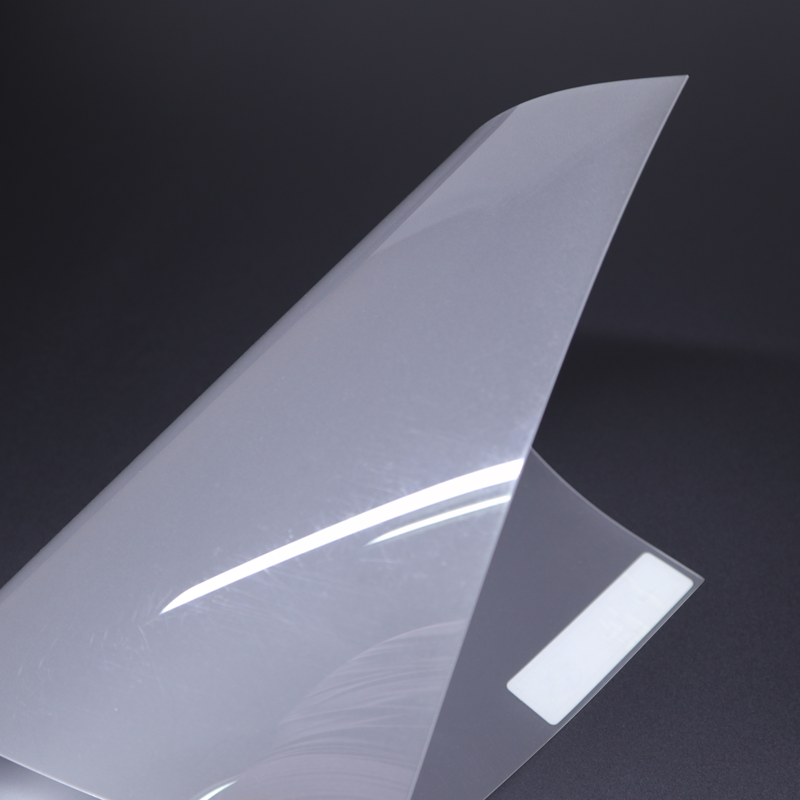
When your application demands more than just transparency—when you need fingerprint resistance, glare control, and a premium tactile feel—standard clear PC film falls short. That's where Textured Polycarbonate Film steps in.
Engineered with a micro-embossed surface on the front and a matte or glossy reverse for second-surface printing, textured PC film is the industry staple for membrane switch overlays, appliance control panels, and industrial nameplates.
| Pain Point | Textured PC Solution |
|---|---|
| Glossy surface shows every fingerprint | Velvet/fine-matte texture hides oils naturally |
| Harsh lighting = reflected glare | Sand-blasted finish diffuses light, improves readability |
| Printed graphics scratch off | Second-surface (reverse) printing behind the film protects ink |
| Repeated finger press wears out | PC base delivers 100K+ actuation cycles for membrane switches |
| Thin film tears on die-cut | Excellent dimensional stability, clean kiss-cut & steel-rule die performance |
Textured PC isn't one thing—it's a family. Choosing the right face changes both look and touch:
Design tip: For backlit overlays, pair a textured front + glossy reverse—the glossy side makes printed colors pop, while the textured front keeps the lit surface from looking like a mirror.
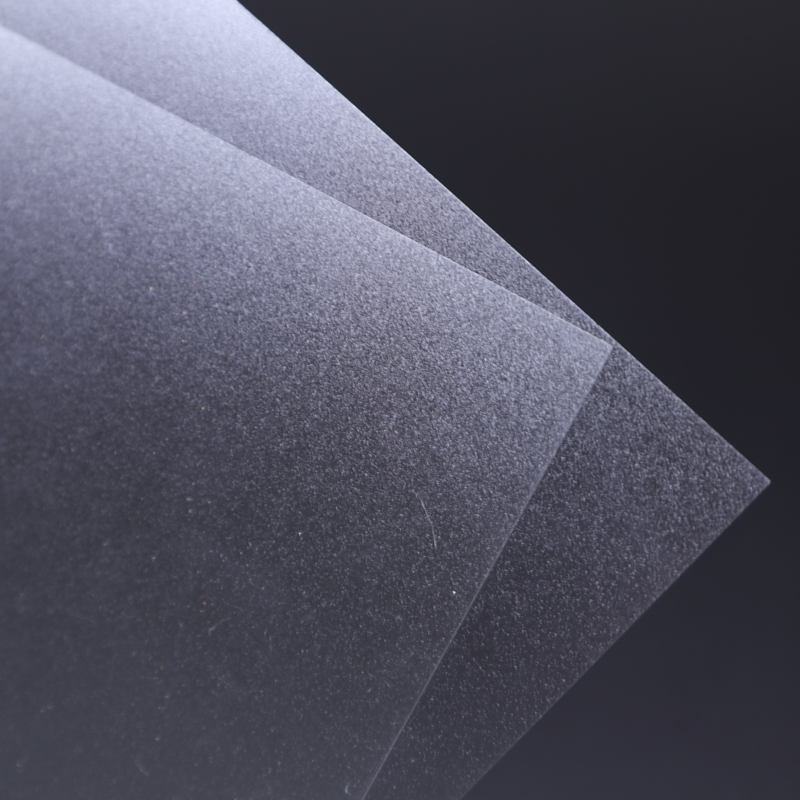
Since textured PC shares the same polycarbonate resin base as DFPC11, expect comparable performance:
| Property | Value | Test Method |
|---|---|---|
| Specific Gravity | 1.20 g/cm³ | ASTM D792 |
| Tensile Strength | ≥ 60 MPa | ASTM D882 |
| Vicat Softening Point | ~135 °C | ASTM D1525 |
| Dielectric Strength | ≥ 30 KV/mm | ASTM D149 |
| Light Transmission* | 40–88% (varies by texture/haze) | ASTM D1003 |
| UL Flammability | V-2 (≥0.25mm) / VTM-2 (thin) | UL 94 |
| Thickness Range | 0.05 – 3.5mm typical | ASTM D374 |
Q: Can textured PC be screen-printed?
A: Yes—reverse-side (second-surface) printing is standard. The textured front protects the ink. UV and solvent inks both bond well; no pre-flame-treatment needed for most grades.
Q: Velvet vs Matte—what's the difference?
A: Velvethas a micro-embossed "soft-touch" feel, better fingerprint hiding. Matteis flatter, more uniform diffusion. Velvet = premium consumer; Matte = industrial readability.
Q: How thin can we go for membrane switches?
A: 0.125mm – 0.175mm (5–7 mil) is the sweet spot for tactile dome response. Go thinner and you lose snap; go thicker and the button feels stiff.
Q: Is hard-coat available?
A: Yes—if your overlay faces chemicals or >500K actuations, ask for hard-coating grade (the TDS mentions "hard-coating grade" as one of the three product categories).
Address:No. 3, Beiyuan Middle Road, Shishan Town, Nanhai District, Foshan City, Guangdong, China
Tel:+86-18126644882(善善)
mobile phone:+86-757-83903883
Fax:+86-757-8180 9526
Email:export9@gddafu.com,874738
If you have any questions or wish to know more information, please feel free to leave a message!!

WeChat Official Account
Tiktok

Contact via WeChat
Copyright © 2025 Foshan Dafu New Material Co., Ltd
粤ICP备2024240626号-1 Site Map